Cedar vs Pressure-Treated Wood: Which Should You Use Outdoors?
Cedar and pressure-treated wood can both make a good outdoor project. The better choice depends on which part you are building: a buried post, a gate frame, a seat or a row of decorative boards. Start with that job, then compare the timber you can actually buy.
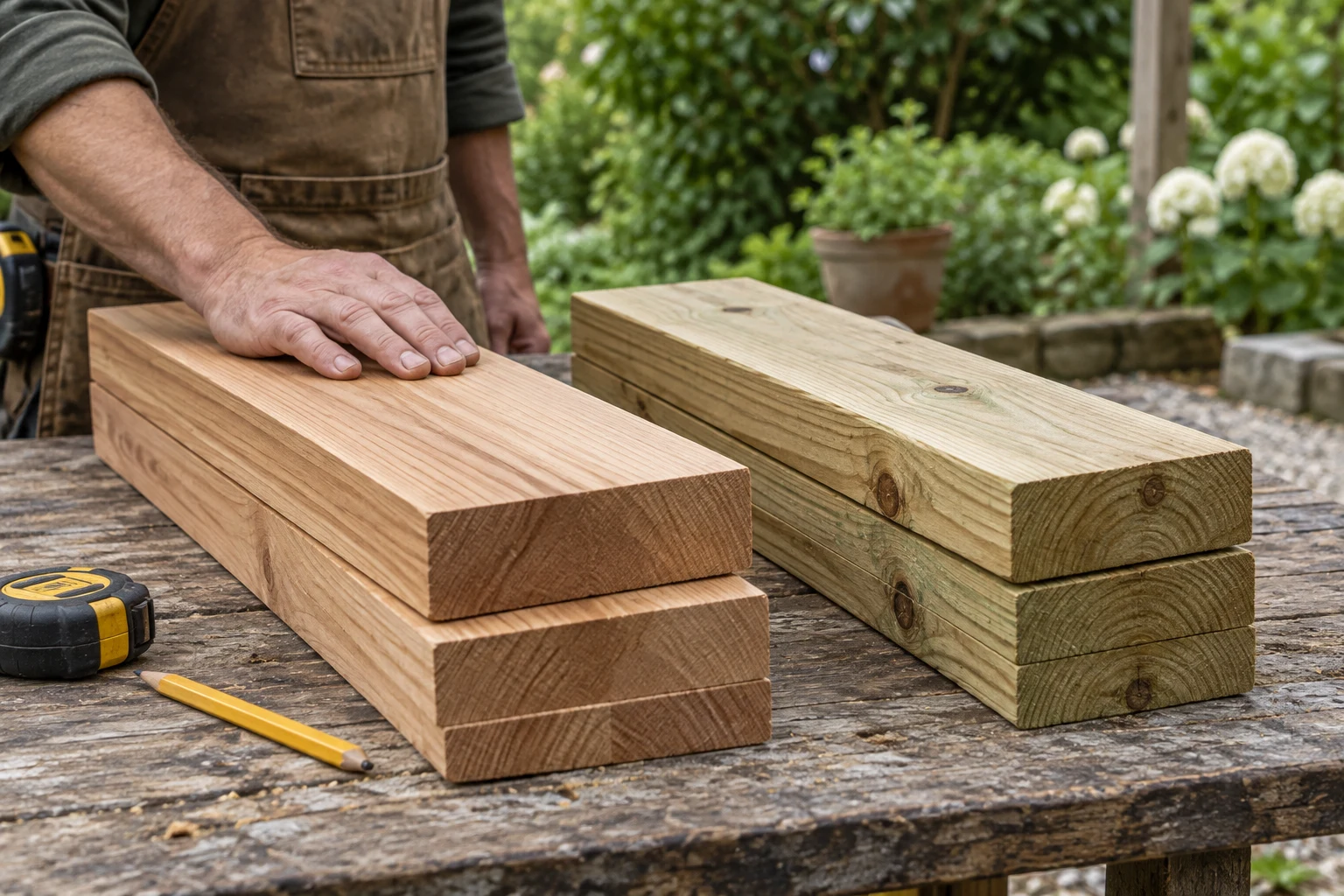
Consider western red cedar for visible, above-ground parts where appearance and a relatively light material matter. Consider correctly specified pressure-treated timber for exposed framing and ground-contact components. In either case, check the species, grade, actual dimensions, moisture condition and connection requirements. A mixed build can work well: suitable treated framing with cedar cladding.
Cedar vs pressure-treated wood at a glance
“Cedar” is a species description, often used loosely in shops. “Pressure-treated” describes a preservation process, not a species or strength grade. This comparison focuses on western red cedar and preservative-treated softwood sold for outdoor construction. Confirm the species if the label simply says cedar: different woods sold under that name are not interchangeable.
| Decision | Western red cedar | Pressure-treated softwood |
|---|---|---|
| Why choose it? | Visible grain, natural colour and relatively low weight | A specified preservation treatment matched to the intended exposure |
| What needs checking? | Species, grade, heartwood content and suitability for the component | Species, grade, treatment category and moisture condition |
| Appearance | Natural colour variation; finishing changes the look | Colour varies with timber and treatment; green or brown is not a performance rating |
| Ground contact | Do not assume every cedar board is suitable | Choose a product explicitly rated for the required exposure |
| Structural use | Use the specified grade and member sizes | Treatment does not replace structural grading |
| Fasteners | Choose corrosion-resistant, cedar-compatible fixings | Check compatibility with the preservative and service environment |
| Budget comparison | Price the actual grade and usable boards | Include the correct treatment, hardware and preparation |
Western red cedar has low density and relatively small dimensional movement, as described by the Western Red Cedar Lumber Association. That makes it attractive for parts you handle or move, but does not make it immune to twisting or splitting. See the association’s material properties.
Start with exposure: above ground is not the same as dry
Walk through the project from the ground up. Which pieces touch soil? Which sit close to wet paving? Where can leaves accumulate? Which joints stay damp after the rest has dried? A protected-looking corner can be a harsher environment than an open board that dries quickly.
For North American treated lumber, the American Wood Protection Association identifies UC3B as exterior above-ground exposure, UC4A as general ground contact and UC4B as heavy-duty ground contact. Select the category required for the application; do not upgrade or downgrade it by colour alone. The end tag should identify the treatment and its intended use. AWPA’s homeowner guide explains the tags.
Those are US classifications, not a substitute for local product specifications elsewhere. When buying in the UK, Europe or another market, ask the supplier for the relevant declared use and installation requirements. A shop’s broad “outdoor timber” category is not enough information for a buried post.
Does cedar rot?
It can. Natural decay resistance is associated with heartwood; it is not a guarantee covering every part of every board. Penn State Extension explains the distinction between heartwood and sapwood and identifies cedar among woods with decay-resistant heartwood. Read its explanation. For a component that is difficult to replace, buy to a clear specification rather than assuming the species name settles the question.
Detailing still matters with either material. Keep soil and mulch away from parts intended to remain above ground, provide drainage, and make it possible to inspect the base. A timber choice cannot correct a site that directs water into the structure. If you are choosing a shed location, start with our shed foundation comparison.
Which should you use for your project?
Garden gates and fence panels
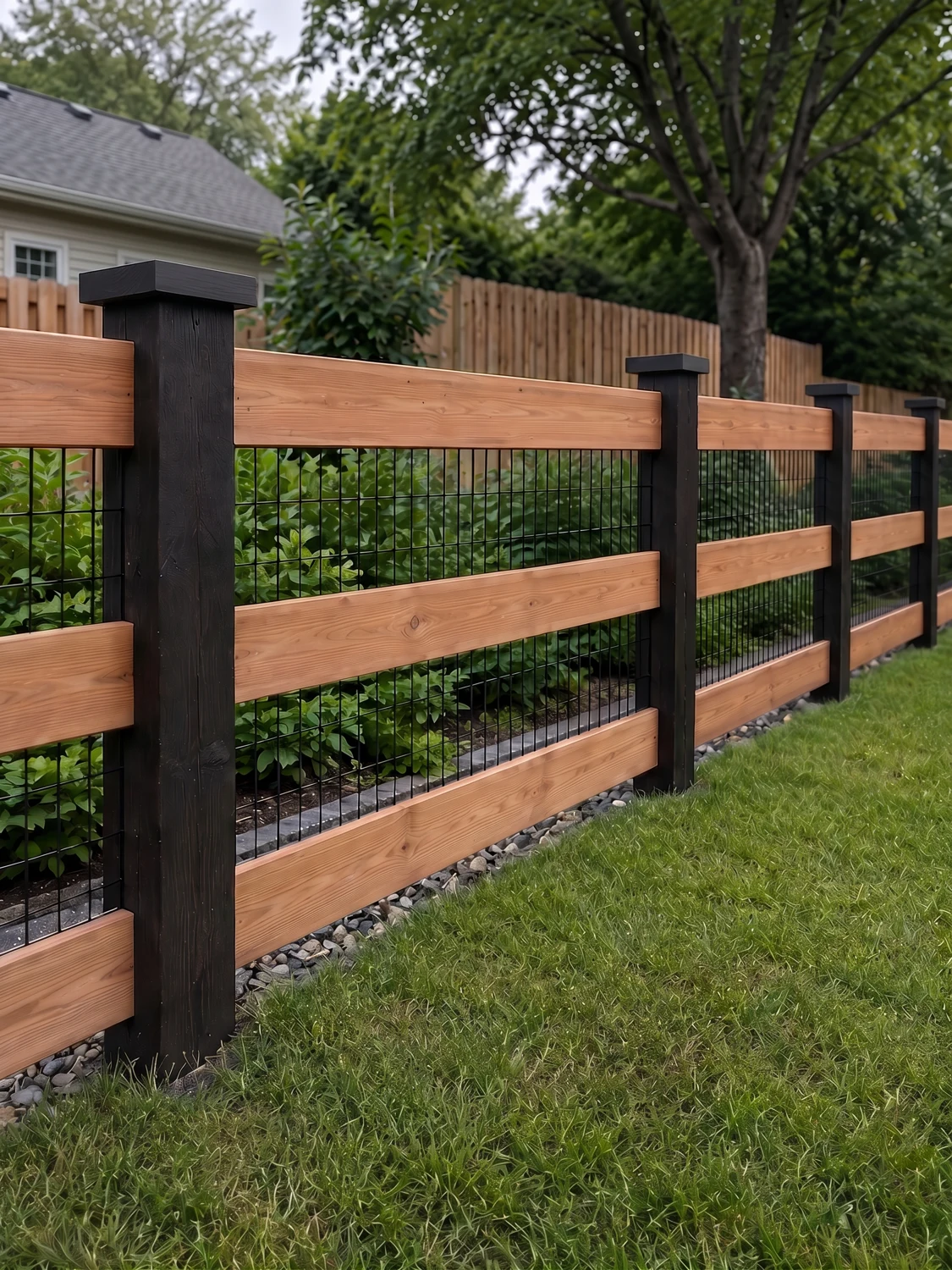
Separate the moving gate leaf from its supports. The leaf benefits from a manageable weight and a stable layout; posts need to suit their exposure and the loads they carry. Cedar facing boards on suitable treated posts can be a sensible combination, but the gate frame and connections still need to follow the design.
Do not replace a specified frame member with thinner cedar merely to make a gate lighter. Board thickness changes screw engagement, joinery and stiffness. Use our wooden gate building guide for frame and brace principles, and the wood and wire fence plans for a coordinated boundary project.
Sheds, bin enclosures and log stores
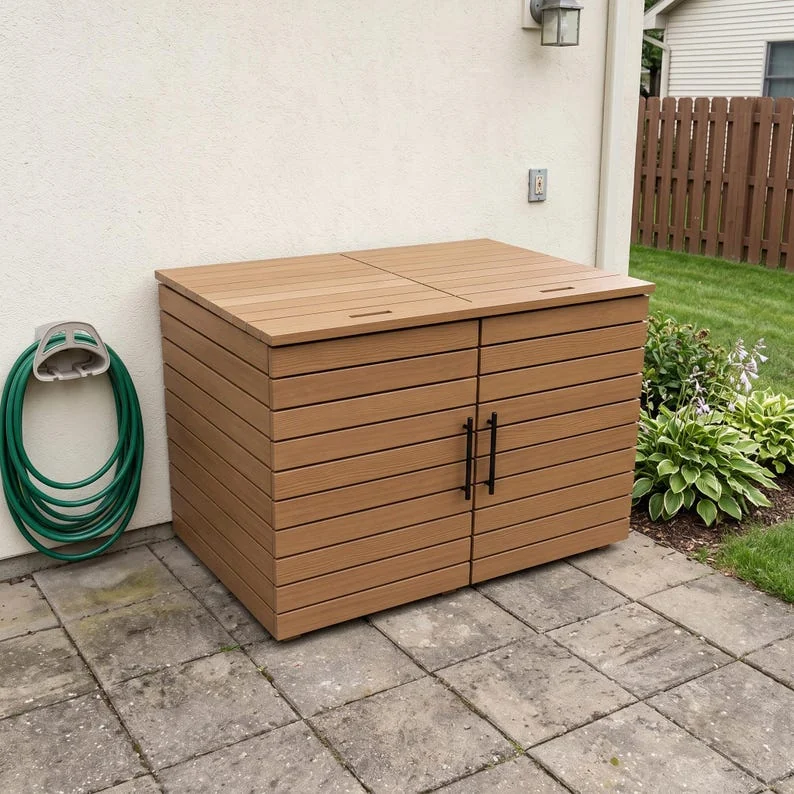
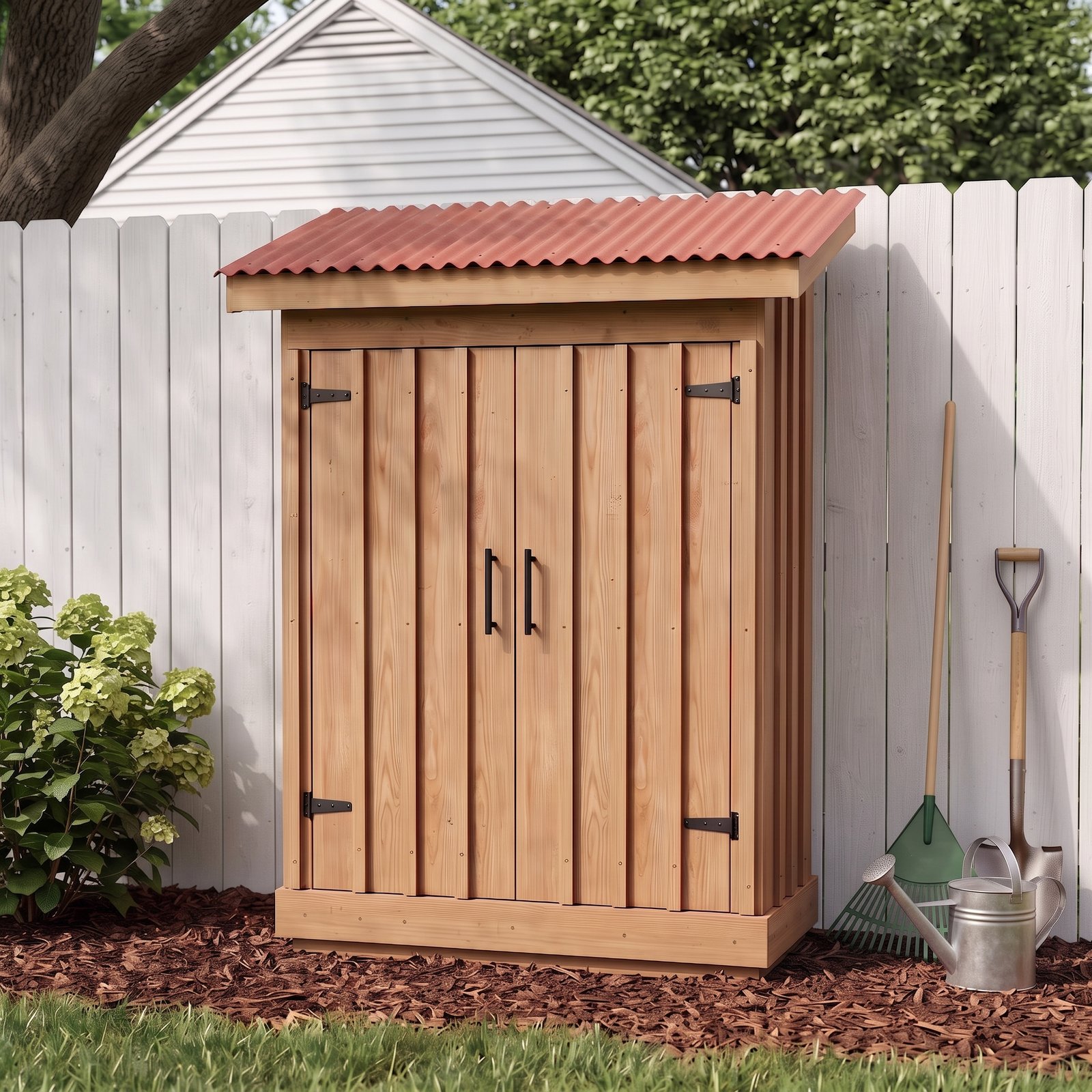
Divide the materials list into structural framing, exterior covering and replaceable trim. You may value cedar on the visible doors while preferring a suitable treated product for the supporting frame. Make that choice before cutting: mixed materials can have different supplied thicknesses and moisture conditions.
For the double trash can enclosure, think about the weight of moving doors and lids as well as the look of the boards. For a log store, remember that the floor carries the firewood. Choosing a durable species does not establish its load capacity. Our firewood storage sizing guide separates volume planning from structural capacity.
Outdoor seating and tables
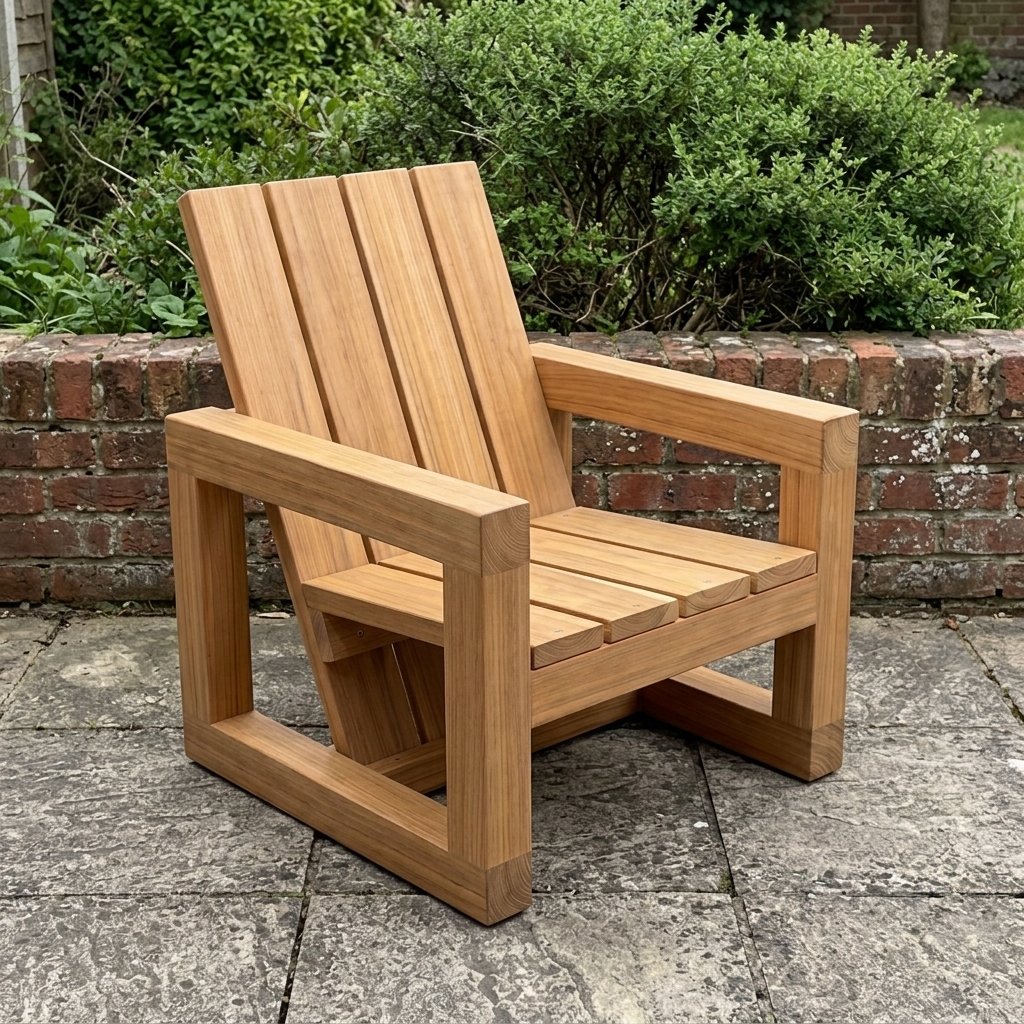
On furniture, judge the surface as well as the specification. Check for splinters, open knots and rough edges at the seat front and armrests. Smooth, comfortable parts are worth selecting individually. Confirm that any treated product is intended for the proposed use and follow its handling instructions.
Furniture joinery often relies on particular stock sizes. If a board is narrower than the plan assumes, the seat depth, gaps and support locations can all change. Compare your timber with the cut list before substituting it in the outdoor lounge chair or another furniture design.
Raised beds
Soil contact makes this a different selection problem from a decorative screen. Choose material explicitly suitable for that exposure and application. If you want to avoid preservative-treated wood, specify the untreated material carefully rather than assuming any cedar board offers the same durability. For treatment-specific questions around growing food, use the product manufacturer’s guidance; a generic comparison cannot identify an unknown preservative.
Plans for your next build
Put your timber choice to work.
Moisture, movement and when to finish
Inspect the timber’s condition when it arrives. Two boards with the same nominal size may not be equally dry or equally straight. Record their actual thickness and width, and follow the supplier’s storage and acclimatisation advice. Stack materials supported and protected while keeping suitable ventilation.
Wet boards can change dimensions as they dry. That matters especially for close board spacing, inset doors and lids. Decide whether your target gap is an installation gap or an in-service gap. Do not copy a photograph’s tiny spacing without accounting for the timber supplied to you.
Ask about kiln-dried-after-treatment stock if the project needs more predictable starting dimensions. It still responds to outdoor moisture, so it does not remove the need for movement allowances. Likewise, cedar’s relatively good dimensional stability does not justify locking a wide board rigidly across its grain.
Do you have to wait six months before staining treated wood?
A fixed calendar rule is a poor way to judge readiness. Read the timber supplier’s instructions and the coating’s surface preparation and moisture requirements. Weather, storage, treatment process and the finish itself affect the answer. Test the proposed finish on an offcut before committing to the entire build.
Separate colour maintenance from structural condition. A faded board is not automatically rotten; an attractive coating does not prove a concealed joint is sound. Inspect connections and water traps as part of maintenance, especially where a door or gate starts to move differently.
Fasteners belong in the material decision
Choose timber and hardware together. Simpson Strong-Tie notes that preservative chemistry and exposure affect corrosion selection. Use the treatment supplier’s and hardware maker’s compatibility guidance, including for screws, hinges, brackets and washers. See the manufacturer’s treated-wood FAQ.
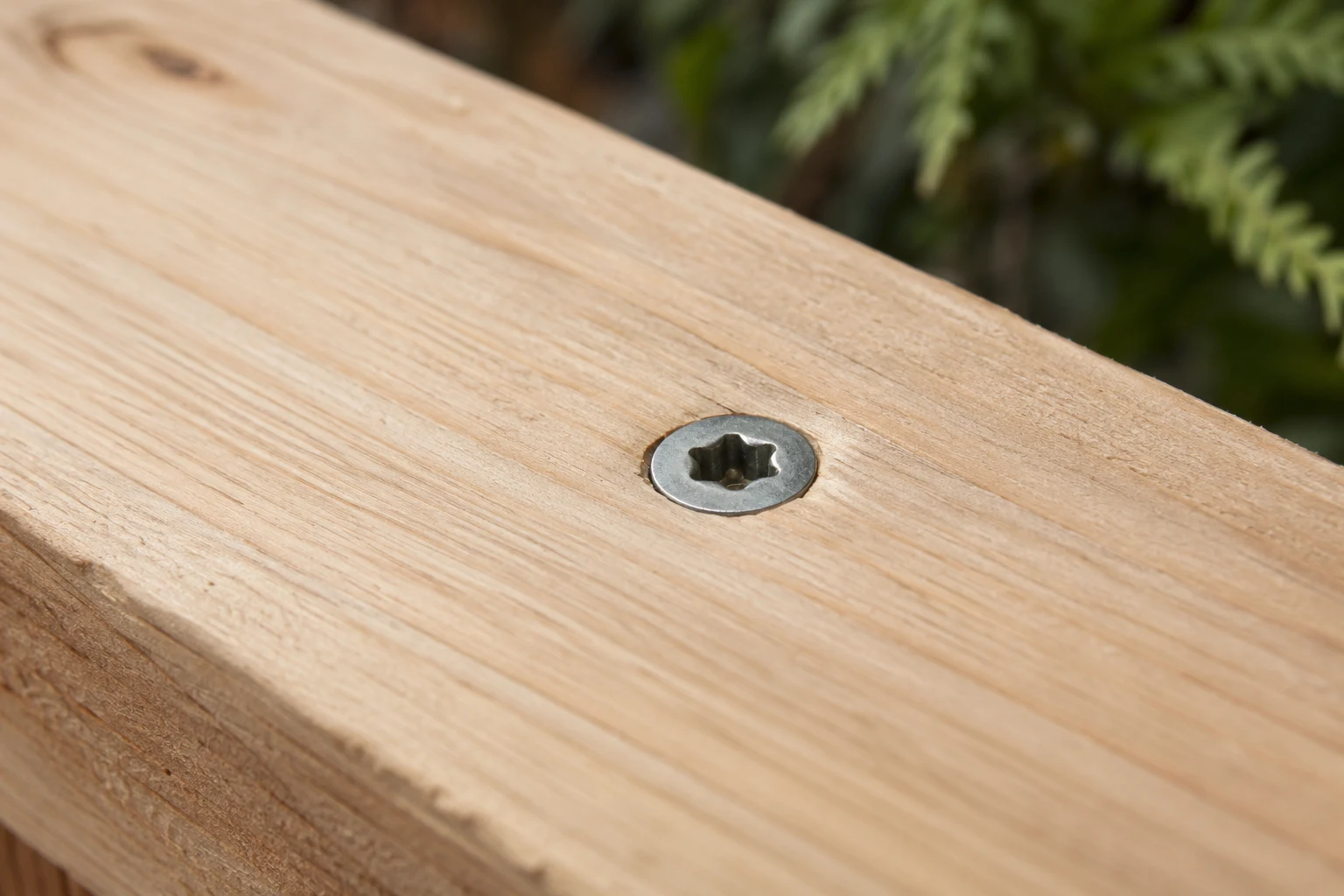
For cedar, corrosion-resistant connections also help avoid staining; the cedar association discusses connection detailing in its outdoor fastener guidance. Avoid treating the word “exterior” on a screw box as a complete specification. Our outdoor wood screw guide covers head shape, length, corrosion resistance and hardware-specific fixings.
Compare the complete shopping list, not one board
Get local quotes for the same finished design. Compare the required species, grade, lengths and actual section sizes. Include delivery, unusable defects, cutting waste, compatible hardware and the finish you intend to use. Prices vary enough that a universal percentage premium is not a useful purchasing rule.
Split your list into framing and visible boards. Suppose two hypothetical quotes differ by $160 on the frame and $90 on the cladding. Choosing the lower-priced suitable frame and your preferred cladding changes the total by $160 compared with using the premium option everywhere. These are example figures, not current timber prices.
Check whether the cheaper quote actually supplies usable lengths. A low unit price loses its advantage if every long component needs a longer stock board, or a knot lands exactly where a hinge must attach. Lay out the critical cuts before ordering.
Before you buy: seven checks
- Mark the ground-contact and persistently damp components on your plan.
- Confirm species, grade and the product’s intended application.
- Measure actual stock dimensions against the cut list.
- Inspect straightness, splits and defects at important joints.
- Confirm the starting moisture condition and storage instructions.
- Choose compatible fasteners and follow instructions for any field-cut treatment.
- Price the complete build, including finish and delivery.
Common questions
Can you use cedar and pressure-treated wood together?
Yes, when each component suits its job and the connection is designed for both materials. Check actual dimensions, moisture movement and hardware compatibility. Cedar cladding does not change the exposure rating needed by the frame behind it.
Which lasts longer?
There is no reliable single lifespan for either category. Species, heartwood content, treatment specification, drainage, climate and detailing all affect performance. Compare the actual products and their warranties rather than a generic number of years.
Is pressure-treated wood stronger?
“Pressure-treated” alone does not answer a strength question. Structural suitability depends on species, grade, size, span, treatment-related design factors and the connection. Do not substitute structural members using appearance or price as the only criterion.