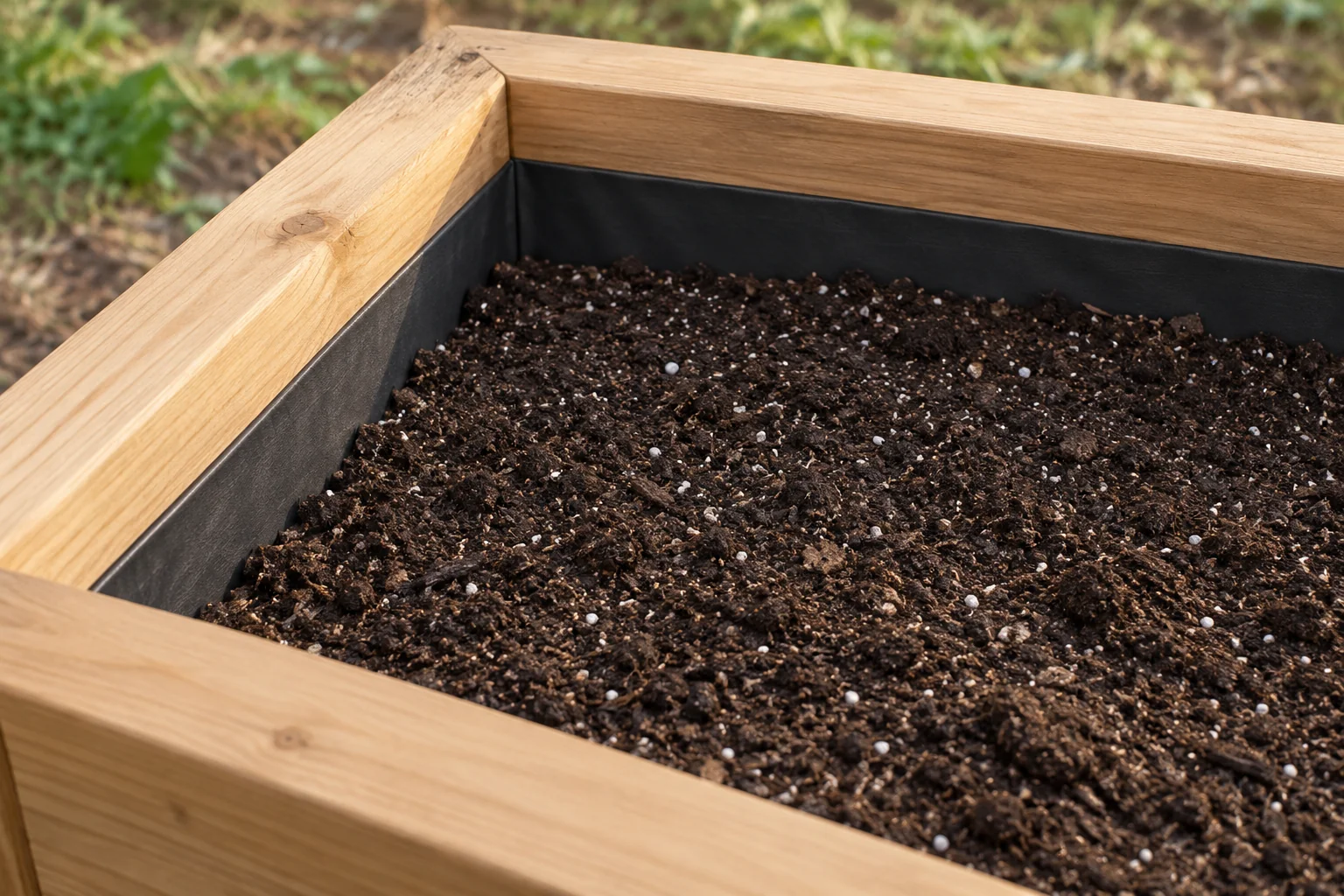
Choose the complete mix for the plant and container: a seed tray, a seasonal flowerpot and a large permanent shrub container do not need identical material
Why garden soil behaves differently in a pot
Container roots depend on a limited volume that must hold water while also admitting air; adding drainage holes does not automatically make a dense growing medium suitable
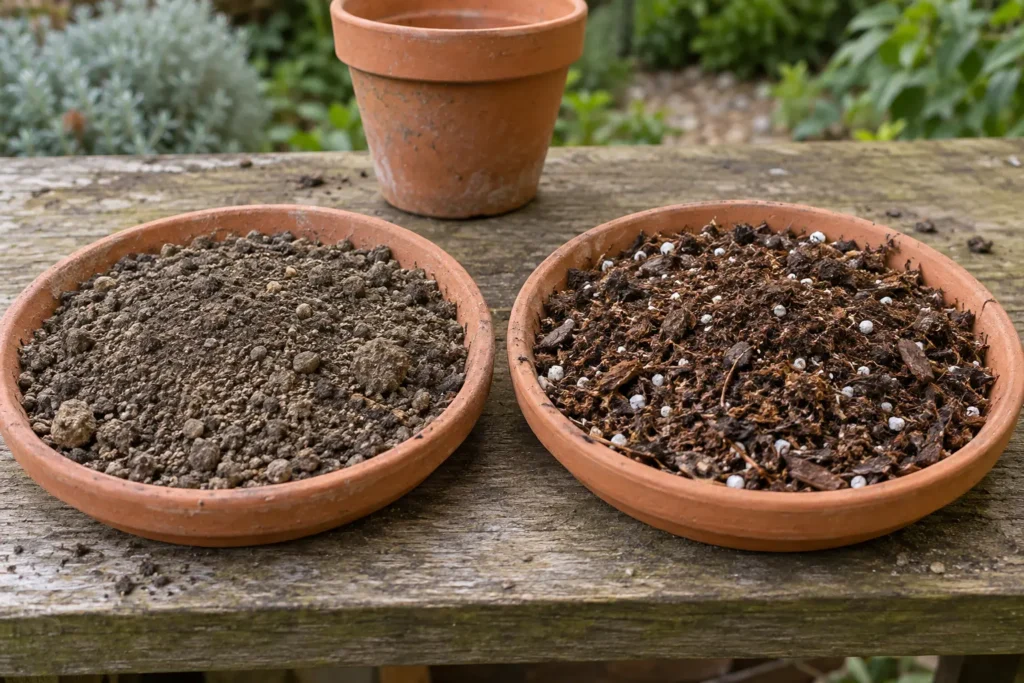
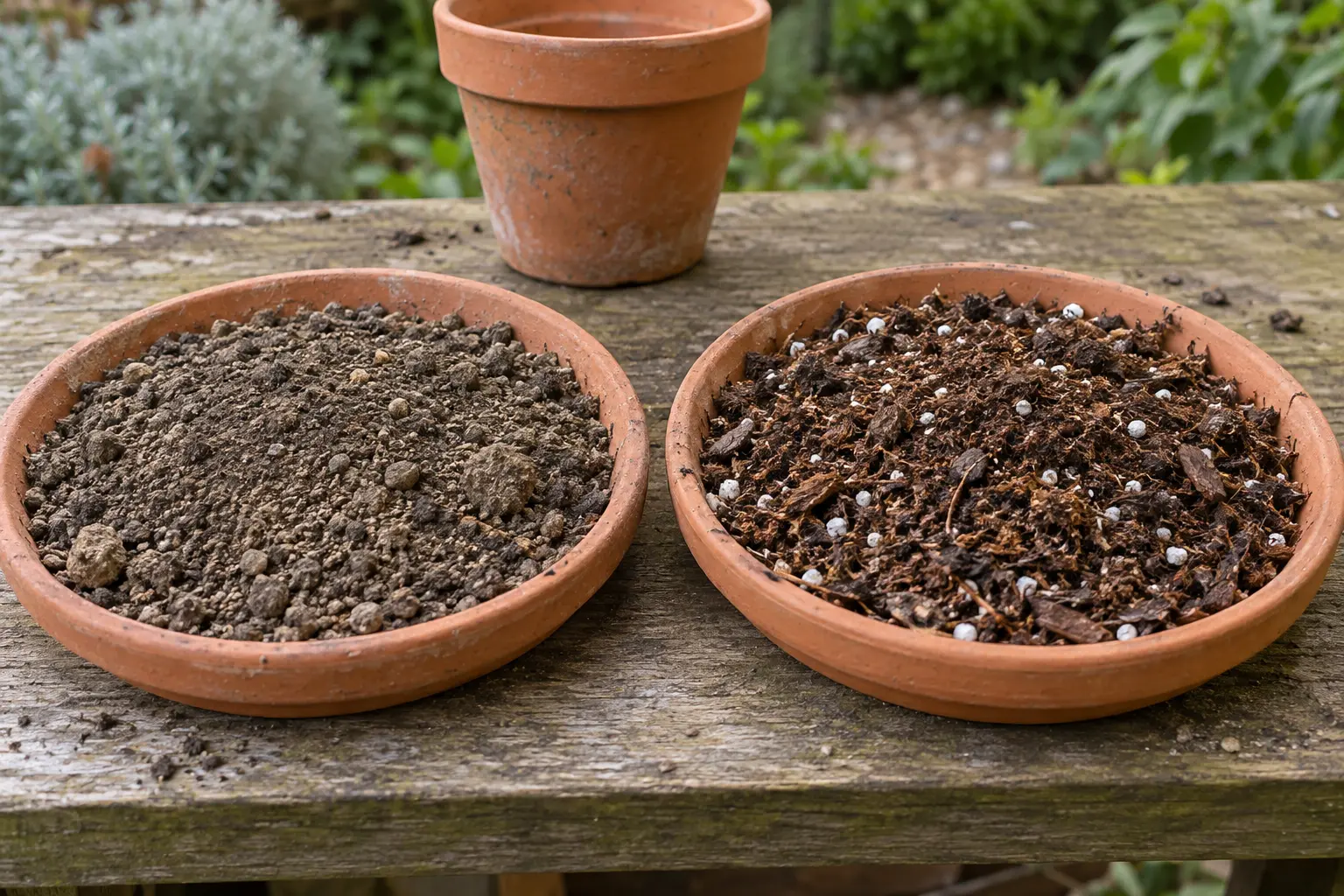
University of Maryland Extension explains that ordinary soil can restrict air and water movement in containers, particularly shallow ones; a loose commercial potting mix is a more predictable starting point for many everyday pots
Do not judge the material only by how rich or dark it looks, or by whether water eventually emerges underneath; the spaces available to roots after watering matter too
A shallow tray is also different from an open-bottom raised bed connected to the ground; use the planting situation, not just the timber surround, to choose the medium
Read the bag by intended use, not just the word compost
| Material | What the name tells you | What to check |
|---|---|---|
| Garden soil or topsoil | Mineral soil, whether dug or supplied in a bag | Its texture, cleanliness and suitability within a chosen recipe |
| Potting compost or potting mix | A prepared growing medium for containers | Plant type, intended use, feeding instructions and drainage characteristics |
| Garden compost | Decomposed organic material, normally used as a soil improver or ingredient | Maturity, quality and the proportion specified in the mix |
| Seed compost | A formulation intended for propagation | Suitability for the seed or cutting, rather than treating it as a general soil substitute |
In UK gardening, “compost” can mean either a bagged potting medium or homemade decomposed garden material; they are not automatically interchangeable
A bag labelled for improving borders is not necessarily intended to fill a container on its own
When a soil-based potting mix makes sense
The RHS describes a homemade general mix of 70% prepared garden soil and 30% organic matter by volume for trees, shrubs, perennials and fruit, with adjustments for soil texture and plant needs
That is a deliberate recipe using prepared ingredients, not advice to shovel untreated clay into every flowerpot; the RHS also advises removing weeds and avoiding soil with troublesome perennial weeds
Guidance differs: Maryland Extension recommends restricting topsoil to no more than 10% in very large containers, while the RHS presents a substantially more soil-based approach for suitable longer-term plantings
Do not average these percentages into an invented universal recipe; choose a complete, appropriate approach, and use a labelled commercial container mix when you cannot assess your soil or the plant’s requirements
For a plant needing a specialist medium, such as an orchid or an acid-loving shrub, follow that plant’s requirements rather than either general-purpose recipe
Calculate a recipe by volume
If you choose the RHS 70:30 recipe for a suitable planting, a 20-litre batch uses 14 litres of prepared soil plus 6 litres of suitable organic matter
Using equal-sized scoops, the same ratio is seven scoops of soil to three scoops of organic matter; it is not seven kilograms to three kilograms
For 10 US gallons of ingredients, the corresponding volumes are 7 US gallons and 3 US gallons, approximately 26.5 and 11.4 litres
These are ingredient-volume calculations, not measured final yield: mixing, settling, the root ball and the watering gap affect how much is needed to fill the pot
Use the planter compost calculator to estimate the actual growing space before buying material
What if the pot is already filled with garden soil?
If it is still empty of plants, it is easier to choose a suitable mix now than to try to alter a planted root zone later
If planted, assess the plant, moisture below the surface, drainage and the condition of the root ball before deciding whether to repot; a single material label does not prove that an established plant is failing
Do not add a loose layer of gravel beneath dense soil as a substitute for choosing a suitable medium; inspect the drainage route through the pot, liner and base
When refilling, leave watering space below the rim and settle the medium gently rather than compacting it tightly
Can I use old potting compost instead?
Possibly, if it remains suitable and its history is acceptable; assess spent potting compost before assuming it is equivalent to fresh mix