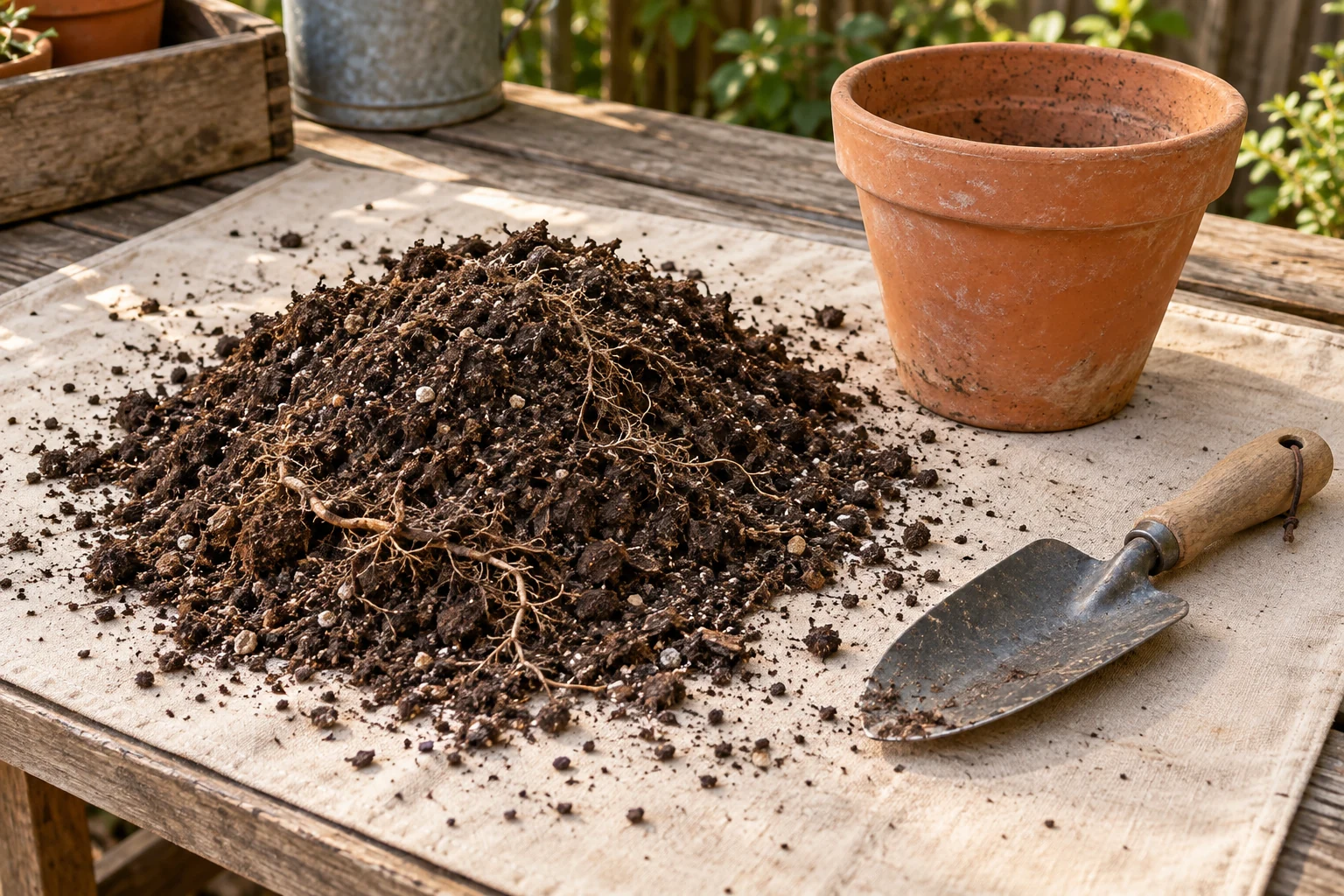
Used potting compost can be refreshed for suitable container plants or reused elsewhere in the garden; inspect its structure and plant-health history first
Adding fertiliser replaces nutrients, but cannot by itself restore a compacted mix or resolve a pest problem
Used potting mix vs garden compost
Here, old potting compost means the growing medium emptied from a container, also called used potting mix or potting soil
Garden compost is decomposed organic matter from a compost heap; it is an ingredient or soil amendment, not automatically a replacement for a balanced potting medium
Check roots, texture and plant-health history
- Check what grew in it
Note known pests, disease, contamination or unexplained plant decline
- Empty the whole container
Inspect the bottom as well as the surface for dense roots and persistent wetness
- Remove debris
Take out large roots, labels, ties and other unwanted material
- Assess the texture
Check whether the mix loosens and wets adequately or remains compacted
- Choose the next use
Base the decision on the new plant’s needs, including any specialist growing-medium requirement
Reuse in pots, spread in the garden or keep separate
| Condition or intended use | Route |
|---|---|
| Known history, workable texture and no identified problem | Refresh for suitable container planting |
| Tired material unsuitable for another pot | Consider mulch or soil improvement where its history and the receiving site allow |
| Identified pest or disease | Keep separate and follow advice for that specific problem |
| Unknown contents or chemical contamination | Resolve suitability before reuse |
| Seed sowing or specialist plants | Choose a suitable purpose-made growing medium when predictable properties are needed |
The RHS spent-compost guide describes reuse in containers and in the garden, and notes that a dead plant does not automatically make its compost unusable
Three examples of what to do with a used batch
| What you have | Next action |
|---|---|
| Mix from healthy seasonal plants, with roots removed and a loose texture | Use the refresh example below for suitable general container planting |
| Dense, root-filled mix that stays compacted after loosening, with no known contamination | Use it for suitable garden soil improvement rather than repeatedly refilling a pot with it |
| Mix containing an identified pest or suspected chemical contamination | Keep it separate; do not dilute it into a larger batch to hide the problem |
A plant that died after missed watering is not the same case as one with an identified root disease. Record the reason for failure where you know it, rather than discarding or reusing every failed pot automatically
Refresh old compost: quantities and mixing examples
For suitable material, the RHS gives an example blend of around 70% used compost and 30% new organic matter, such as garden compost or well-rotted manure
| Example batch | Prepared used compost | New organic matter |
|---|---|---|
| 10 litres | 7 litres | 3 litres |
| 20 litres | 14 litres | 6 litres |
Measure by volume using the same container and mix thoroughly; the 30% ingredient is organic matter, not concentrated fertiliser
This example is not a universal recipe for orchids, succulents, acid-loving plants or propagation
The RHS repotting guide explains that breakdown of organic ingredients changes air space, drainage and water retention; judge whether the refreshed texture suits the intended plants
When you know how much used compost you have
The 70:30 ratio describes the finished mixture. If you start with 20 litres of prepared used compost, adding 6 litres of organic matter does not produce that ratio
Organic matter to add = used compost × 3 ÷ 7
| Prepared used compost | Organic matter to add | Approximate finished volume |
|---|---|---|
| 7 litres | 3 litres | 10 litres |
| 14 litres | 6 litres | 20 litres |
| 20 litres | 8.6 litres | 28.6 litres |
| 35 litres | 15 litres | 50 litres |
For example, a planter needing 40 litres of suitable refreshed mix takes 28 litres of used compost and 12 litres of organic matter. If you have only 20 litres of used material, make the smaller 28.6-litre batch and supply the remaining fill with an appropriate growing medium
These are volume calculations using the RHS example ratio; they do not predict nutrient content, compaction or how a particular plant will grow
Feed the new planting without double-dosing
Used mix may retain some nutrients or controlled-release feed, but its appearance cannot tell you how much
Choose a feeding programme for the plant and final mixture, account for feed already included in new ingredients and follow the fertiliser’s application rate
Label the batch with its ingredients and any feed added so it is not accidentally fed twice
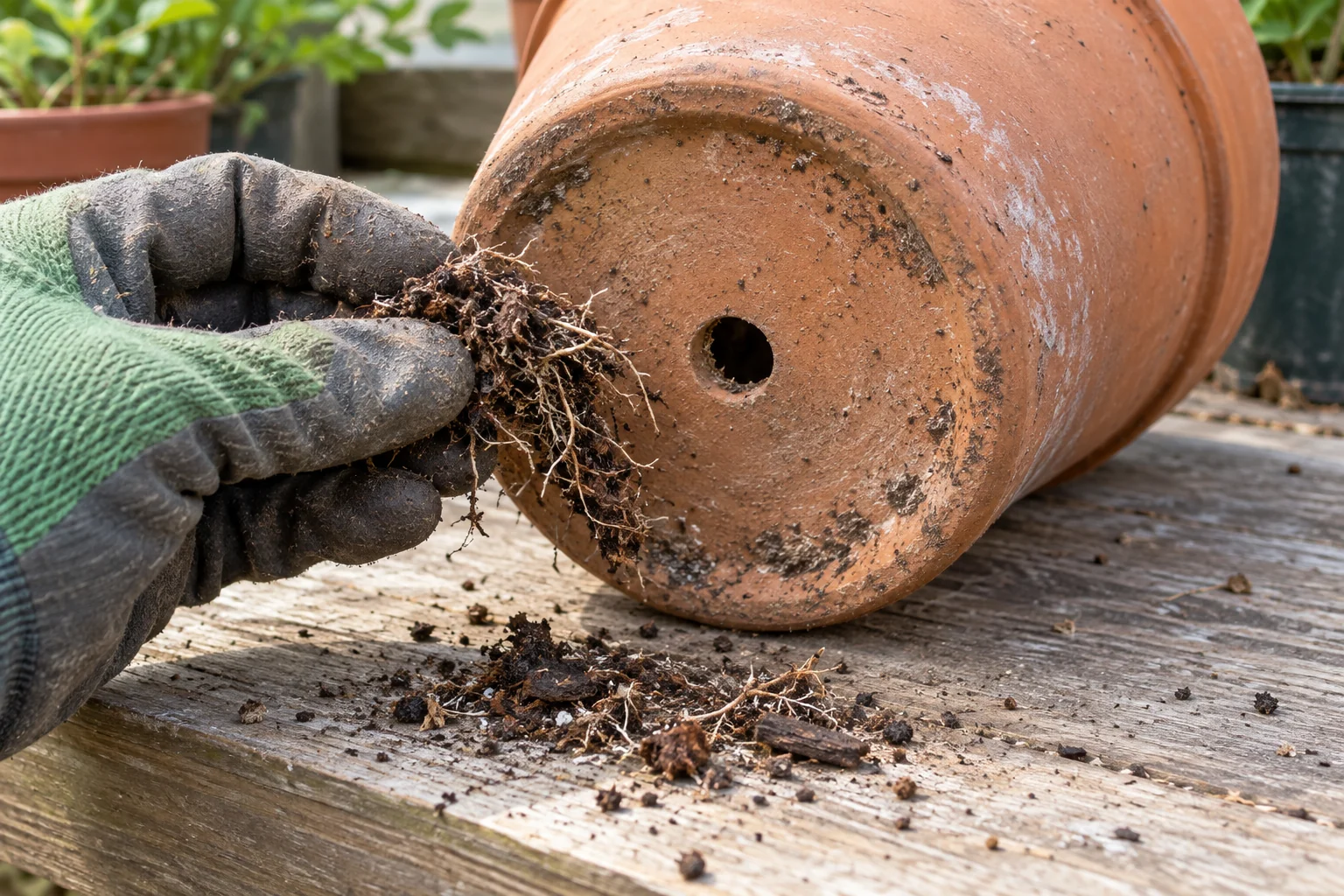
Clear drainage holes before refilling
- Clear the outlets
Remove roots and old mix blocking the base and inspect the liner
- Measure the growing space
Use the compost calculator to estimate the fill volume, allowing for root balls and watering space
- Check after planting
Monitor moisture within the root zone because the refreshed mixture may retain and release water differently
Common reuse questions
Can I reuse it for seed sowing?
Use a suitable seed-sowing medium when you need predictable fine texture and propagation performance; uncertain spent mix can go to a more suitable garden use
Should I sterilise it in the oven?
Use fresh, suitable medium for propagation rather than trying to make an uncertain batch reliable in a kitchen oven; keep material with an identified pest or disease separate and follow advice for that problem
Can all of it go back into the same planter?
Only if the resulting mixture suits the next planting and the container drains properly
Is it useless after the nutrients run down?
No; nutrition, physical structure and plant-health history are separate considerations