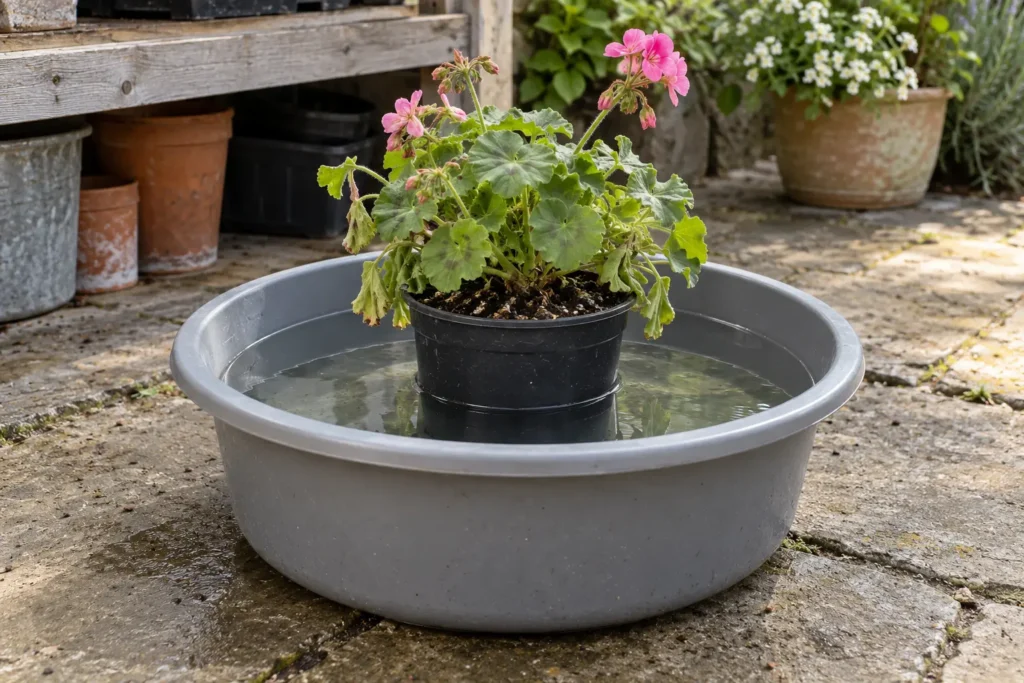
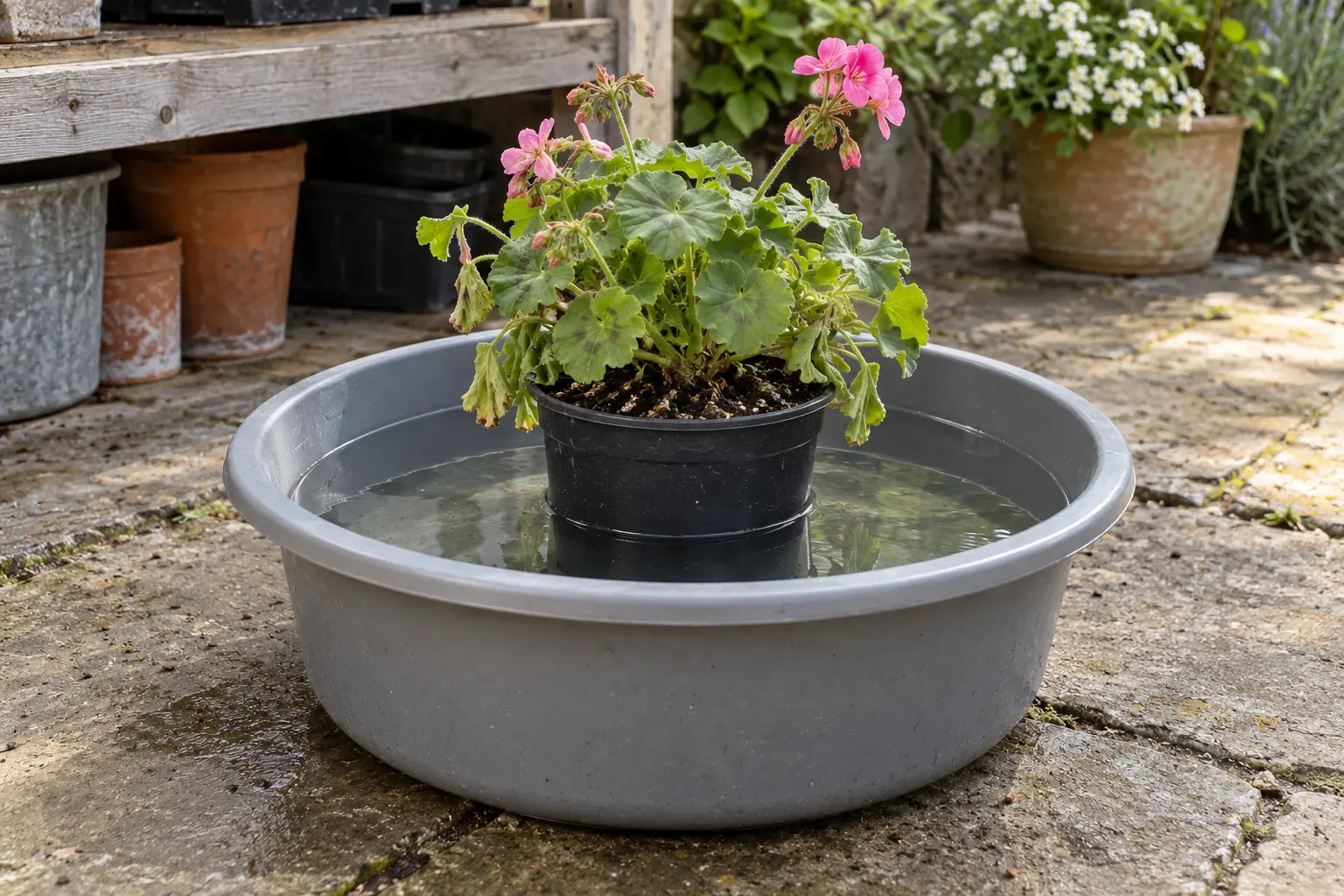
Check that moisture reaches the root ball, then allow excess water to drain; water running out immediately can mean it has bypassed dry compost down the sides
Check whether the compost is dry or waterlogged
Compost that has dried severely can shrink away from the pot, allowing water to run through the gap rather than wet the roots
Feel below the surface and compare the pot’s weight with its familiar freshly watered weight where it is safe to lift; do not diagnose dryness from wilting leaves alone
| Observation | Likely next check |
|---|---|
| Light pot, dry root zone, water bypassing the sides | Try controlled rewetting |
| Heavy pot and wet compost that stays saturated | Inspect drainage and plant/root condition before adding more water |
| Moist surface but dry material deeper inside | Water has not wetted the root zone evenly |
| Water cannot leave the pot | Find the blocked outlet or standing water in the outer container |
When the medium is already wet, another soak can make the problem worse
How to rehydrate dry compost in a small pot
- Remove the decorative outer container
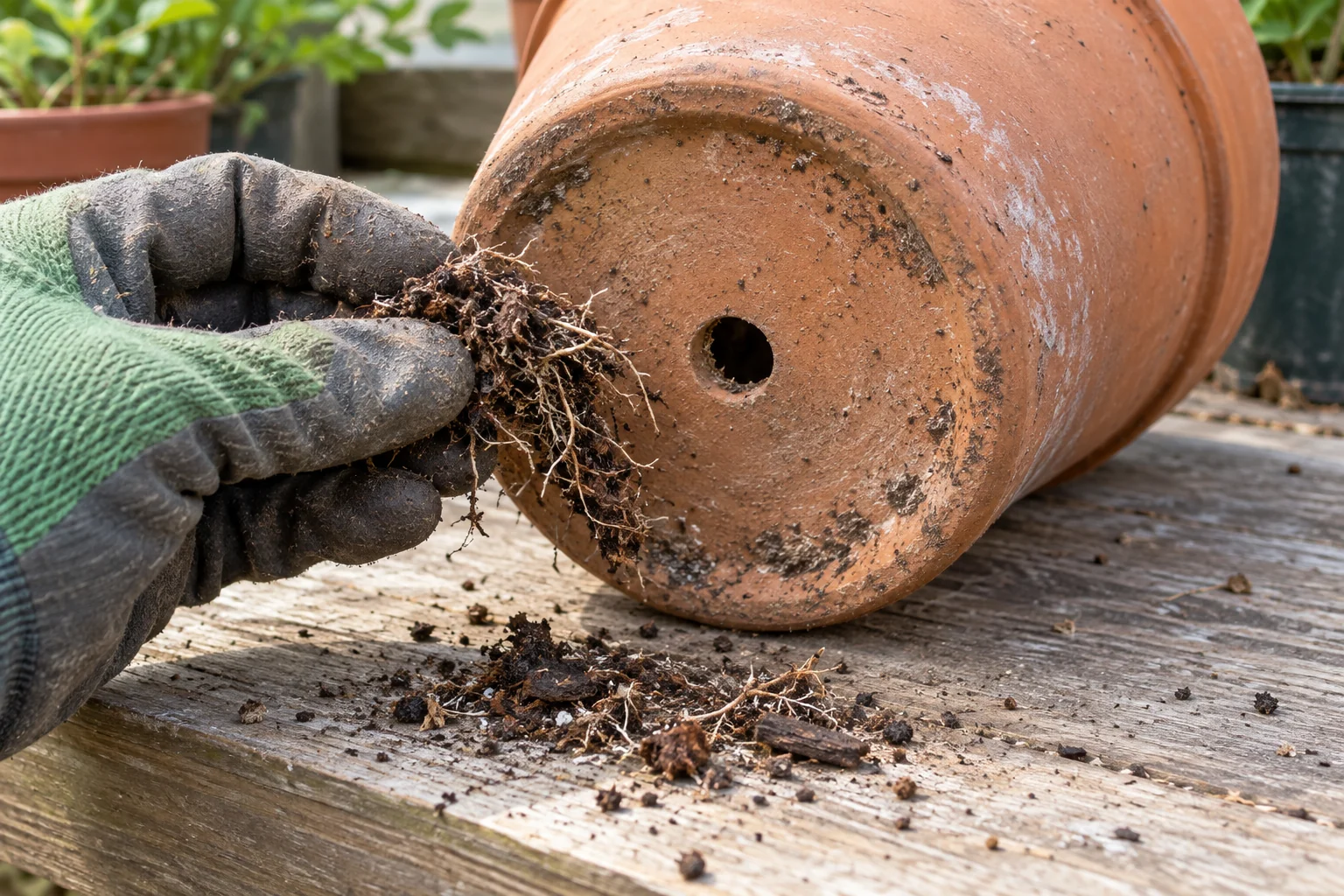
Work with the draining nursery pot and check that its outlets are open
- Stand it upright in a clean basin
Add water around the pot so it can enter the drainage holes, keeping the plant’s crown and foliage above the water
- Allow time for absorption
Iowa State Extension gives 20–30 minutes in a tub as guidance for containers that have dried completely; check the compost rather than treating that duration as a guarantee
- Check the root zone
Look for a more evenly moist mix and increased pot weight, without repeatedly pulling or disturbing the plant
- Lift out and drain
Let surplus water escape, empty the saucer or outer pot, and return the plant to a suitable position
This is a temporary recovery method, not an instruction to leave ordinary container plants standing in water overnight or keep them permanently saturated
Rewet a large planter without lifting it
Water close to the compost surface using a gentle flow; pause to let each application soak in before repeating across the root zone
The RHS recommends slow, thorough container watering because rapid pouring increases runoff and disturbance
If water repeatedly rushes down one gap, stop treating runoff as proof of successful watering and check moisture within the mix; work methodically across the surface instead of pouring harder into the same spot
For removable pots inside a timber surround, soak the manageable inner pots separately where practical; the decorative box itself is not the root zone
For a directly planted wooden container, check that water can leave through the liner and base outlets, and that it cannot collect in a concealed pocket
Moisten unused bagged mix before potting
Loose dry mix is easier to wet evenly before it surrounds a living root ball
Put only the amount you need into a clean tub, add water gradually and turn the material until there are no obvious dry pockets; aim for evenly damp material, not a muddy slurry
University of Connecticut recommends moistening potting medium before use because dry organic ingredients can resist water and otherwise leave inconsistent moisture around the roots
Follow the bag’s handling instructions and avoid raising dust; do not pour boiling water over planted roots or improvise a detergent mixture
If a specialist wetting agent is genuinely needed, use a horticultural product labelled for the plant and growing medium, at its stated rate
Check the result and prevent a repeat
A useful check is a small observation log: record whether the centre was dry, whether soaking increased pot weight, whether the mix became evenly moist, and whether water drained afterwards
This makes the next decision clearer without pretending a fixed water dose works for every pot
For example, if water runs out quickly but the container stays unusually light and the centre remains dry, it still needs careful rewetting; if the centre is now wet and the pot is heavy, stop adding water and assess any continuing wilting separately
Recheck moisture according to the plant, container and weather; heat, wind, a small pot or a crowded root system can change how often watering is needed
If the mix repeatedly shrinks, compacts or becomes difficult to manage, consider whether the plant needs repotting with a more suitable medium
Does rehydrating restore old compost’s nutrients?
No; rewetting addresses moisture, while fertility and physical condition need a separate assessment using the spent-compost guide
Will every wilted plant recover?
No; rewetting can correct a dry root zone but cannot guarantee recovery from severe root or tissue damage