How to Stop Shed Condensation: Find the Cause and Fix It
A wet shed roof is not always a leaking roof. Condensation, wind-driven rain and moisture from the ground can look similar from inside, but each needs a different repair. Start by finding when and where the water appears.
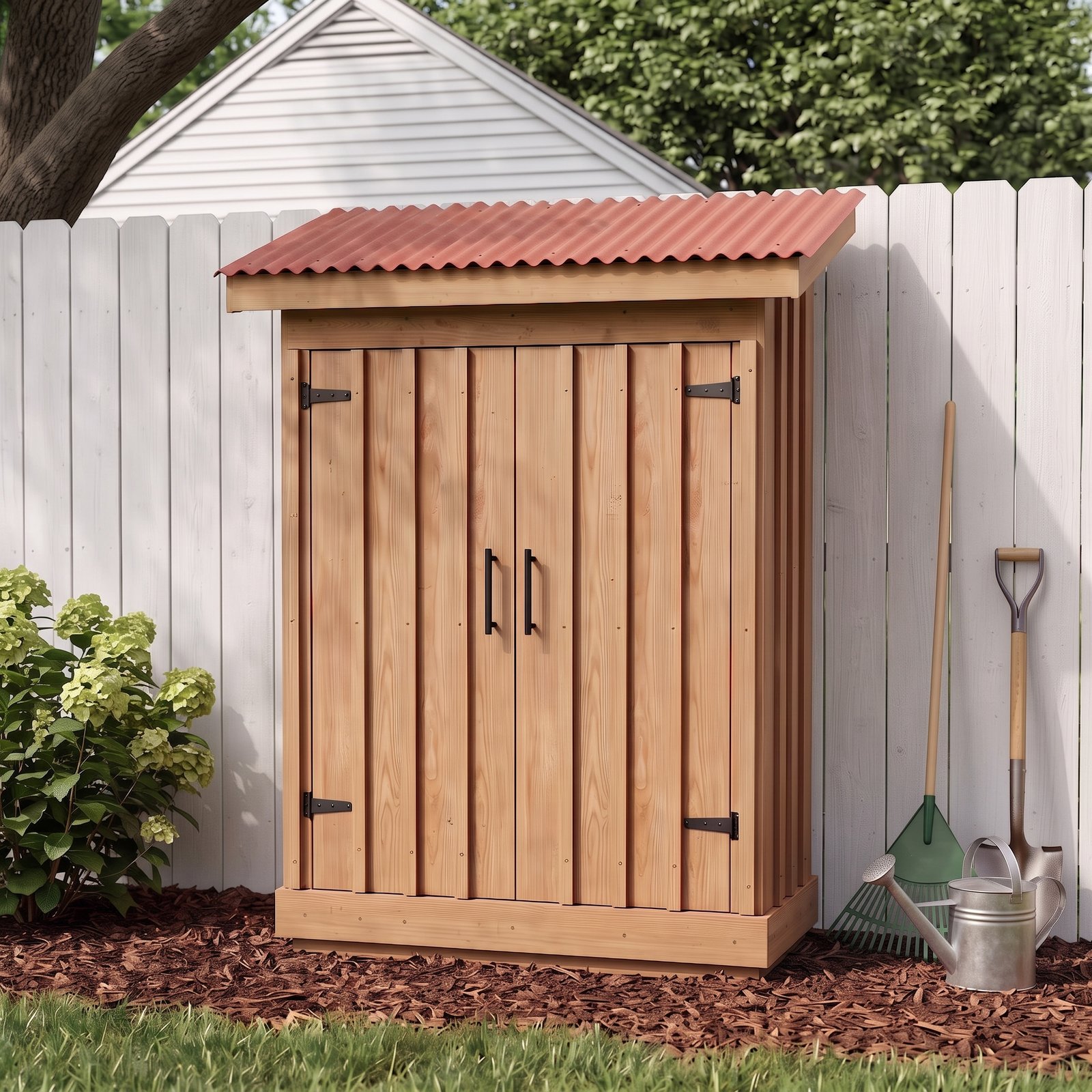
Reduce moisture entering the shed, give damp air a route out and address cold roof surfaces with a roof system suited to the building. First rule out leaks and ground-water problems. Ventilation and an anti-condensation roof lining can help, but neither repairs a leak or guarantees dry storage in every climate.
Is it condensation, a roof leak or damp from below?
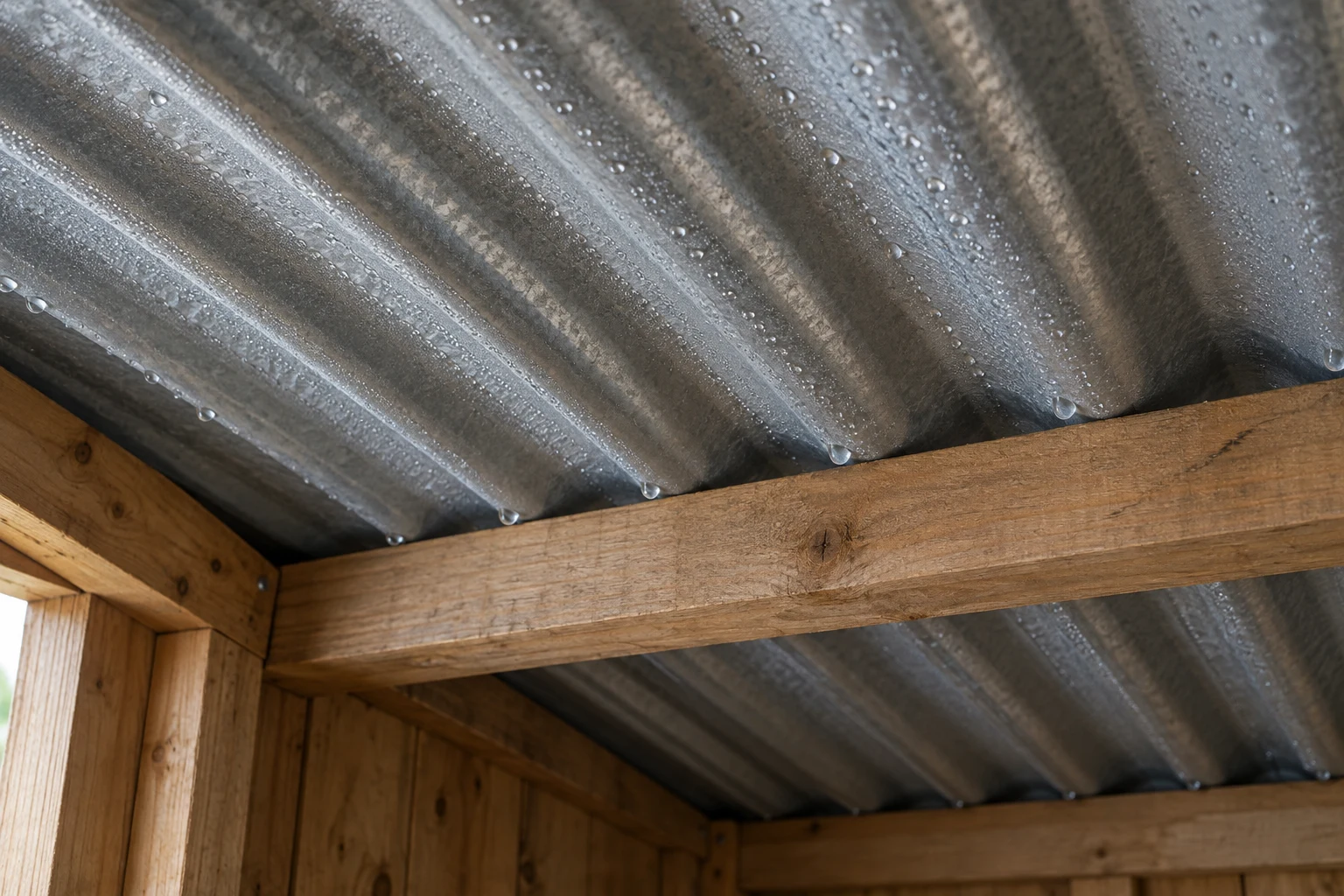
Condensation forms when a surface is cold enough for moisture in the surrounding air to become liquid on it. An uninsulated metal roof can cool quickly, so droplets may appear even when no rain has entered the building. A timber shed with metal roofing can have the same problem as a metal shed.
Do not diagnose it from one visit. Inspect after a dry, cold night, during or immediately after rain, and after putting wet tools inside. Photograph the same corners and roof areas each time. The timing and distribution of water are more useful than the size of one puddle.
| Observation | Possible explanation | What to inspect next |
|---|---|---|
| Fine droplets over a broad roof area after a cold night | Condensation | Interior moisture, blocked vents and roof construction |
| A concentrated drip during rain | A leak, although water can travel along framing | Sheet laps, flashings, washers and penetrations |
| Wetness along the base after heavy rain | Runoff, splash or water crossing the threshold | Ground levels, drainage and floor edges |
| Damp behind tightly packed contents | Restricted local airflow or a concealed leak | The wall and roof above, then the storage layout |
| Roof lining repeatedly saturated | More moisture than it can release between cycles | Airflow, wet contents and the lining installation |
These are clues, not definitive tests. Condensation and leakage can occur together. A drip at a screw does not prove the washer leaks: water may be running to that low point from elsewhere. Inspect the roof safely from accessible positions; avoid walking onto lightweight shed roofing.
Remove the moisture sources you can control
Before buying vents or insulation, empty enough of the shed to inspect the floor, wall bases and corners. A stack of bags can hide the source for months. Separate the contents into items that need dry storage and items that are introducing water.
- Wet lawnmowers, hoses, garden furniture and muddy tools.
- Fresh firewood, damp compost and uncovered soil.
- Roof runoff discharging beside the walls.
- Standing water beneath a raised floor or against a slab edge.
- New concrete or construction materials still drying.
- Rain entering around doors, windows or poorly detailed roof edges.
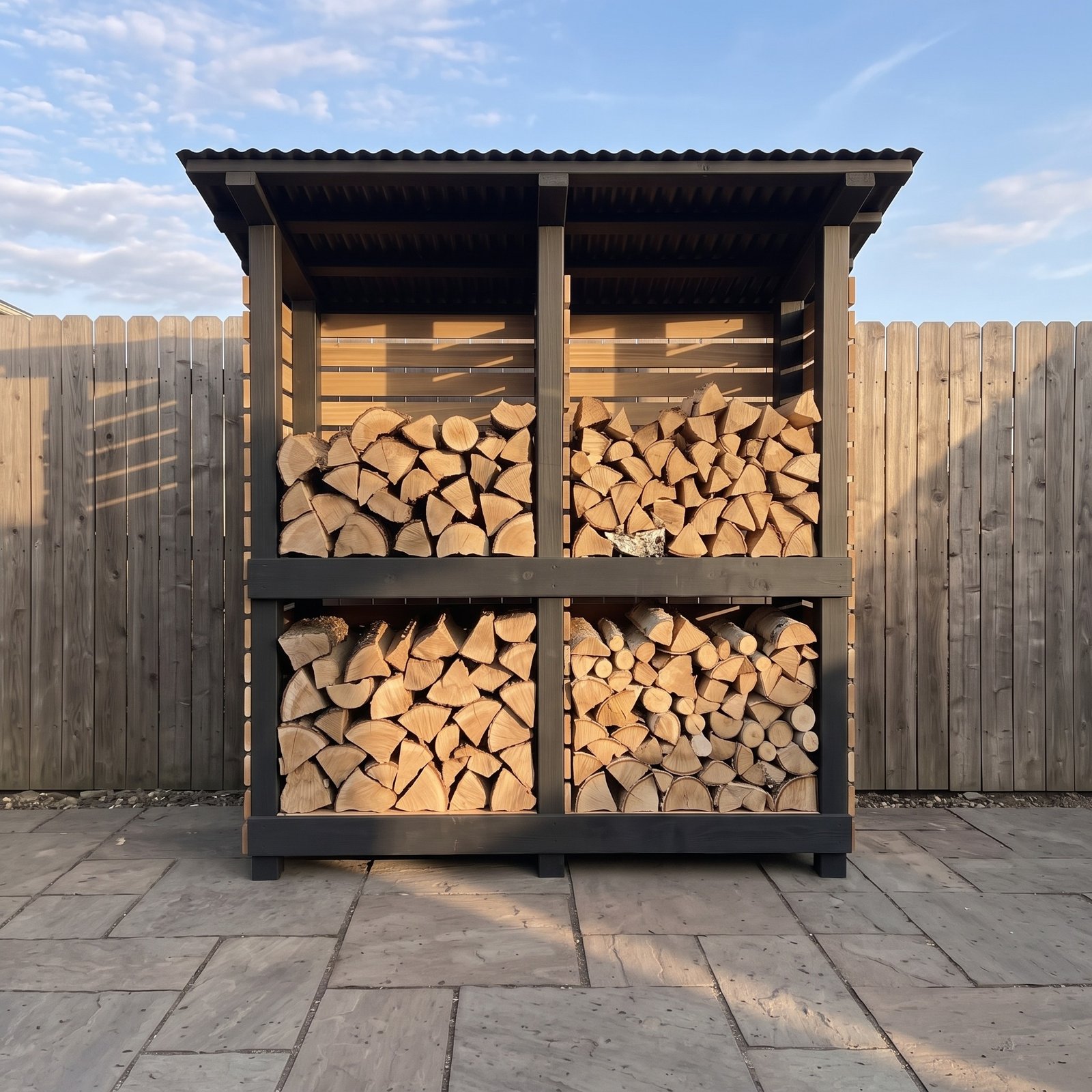
Let wet equipment drain and dry in an appropriate sheltered place before returning it. Do not use a closed tool shed as a seasoning chamber for a large delivery of wet logs. Our outdoor firewood storage guide explains how a separate ventilated store keeps that drying task outside the tool shed.
Walk around the building during rain if it is safe. Follow the water from the roof to its final destination. A gutter helps only if the downpipe moves water somewhere suitable; discharging at the wall can relocate the problem rather than resolve it.
Check the foundation and floor
A shed floor should be considered as part of the moisture-control design. For new construction, decide on drainage, separation from damp ground and any appropriate damp-proof membrane before installing the shed. Retrofitting a sheet over a wet floor may hide moisture without solving its route into the building.
Tuin’s metal-shed guidance identifies both a moisture barrier beneath a new concrete base and opposing ventilation openings as useful measures. The detail still needs to match your own floor and shed system. Compare the practical options in our gravel, concrete and block foundation guide.
Planning a compact garden store? Start with the lean-to garden tool shed plans, then coordinate the foundation, roof specification and storage layout for your site. A building plan is a starting point for those decisions, not a promise that any site or roof configuration will remain condensation-free.
Plans for your next build
Explore more garden storage projects.
Create an air route, not just a hole
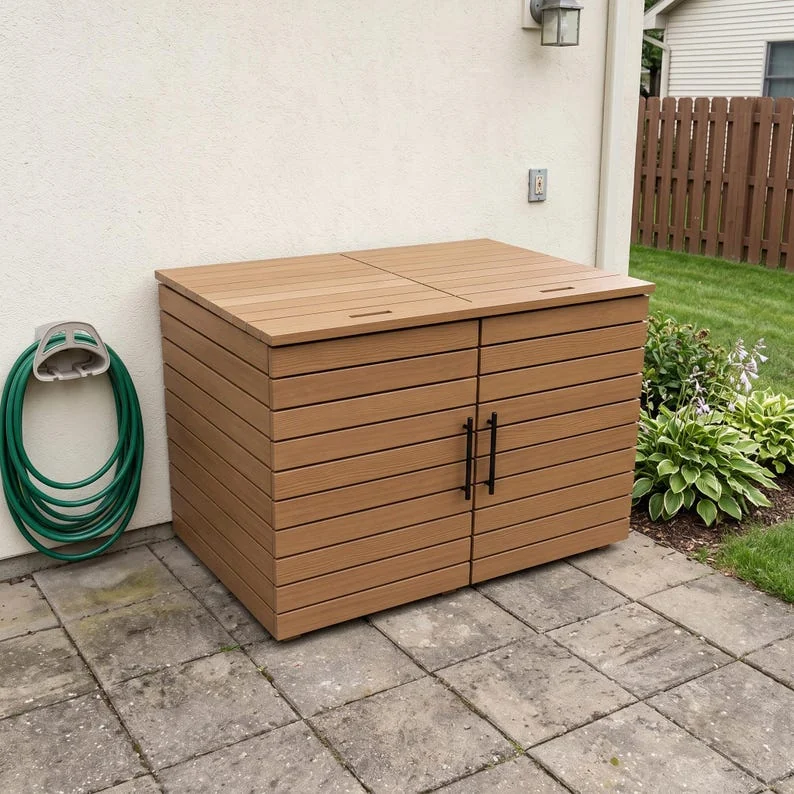
For a small unheated storage shed, check the existing ventilation first. Look for intentional openings at eaves or walls that have been blocked by trim, insulation, leaves or stored items. Do not seal every gap simply because a draught seems undesirable: some openings may be part of the ventilation design.
Air needs a way in and a way out. Openings on different sides can support cross-ventilation when wind conditions allow. A low inlet and higher outlet may support air movement in an appropriate design, but opening positions must also resist rain entry and preserve the framing.
Do not cut structural members to install a vent. Choose weather-resistant fittings, flash them as required and consider insect screening. Screens and louvres reduce the effective opening, so the external grille dimensions are not the same as its net free ventilation area.
There is no defensible universal “two vents are enough” rule for every shed. Size, layout, local humidity and use all affect the requirement. Use the shed or roof manufacturer’s requirements; a heated workshop or occupied garden room needs a more complete design than an unheated tool store.
Make room for air inside the shed
Keep vents visible and accessible. Leave a practical inspection and circulation space behind shelves instead of packing bags tightly against cold walls. Store moisture-sensitive items above the floor, and avoid creating a sealed pocket beneath a workbench with damp materials inside it.
As a layout exercise, mark a 2 in (5.1 cm) inspection space behind a freestanding shelf and check whether you can still see and clean the wall. That is an access example, not a calculated ventilation requirement. Increase the space if the contents, fittings or construction need it.

What does an anti-condensation roof lining do?
A purpose-made absorbent lining beneath metal roofing can temporarily retain condensed moisture instead of allowing it to drip. It then needs conditions that let the retained water evaporate. Accord Steel Cladding explains this storage-and-release function for its factory-applied lining.
The important distinction is between managing a condensation cycle and removing its cause. A lining does not repair a leaking lap, stop water entering at a roof penetration or remove a continuous moisture supply from wet ground. If it cannot dry between cycles, it can become overwhelmed.
Before ordering roof sheets, ask the supplier about the required pitch, ventilation and treatment at sheet edges and laps. Do not substitute generic felt or glue an improvised lining onto an existing roof without a compatible system. Installation details affect capillary water movement, drying and warranty conditions.
Will insulation solve it?
Insulation can change surface temperatures, but its location and the control of air and water vapour matter. Adding boards beneath an existing roof can conceal a cold, wet cavity if the roof assembly is not designed correctly. Avoid stuffing insulation into every available gap and hoping that warmer-looking surfaces mean the roof is dry.
If you intend to heat or occupy the building, specify a complete wall and roof assembly for the climate and use. That may involve insulation, air sealing, vapour control and ventilation details that are quite different from those of a basic cold shed. Obtain the appropriate system design before closing cavities.
Use this repair sequence before spending on equipment
- Record the pattern: distinguish rain-related wetness from overnight droplets and wet-floor problems.
- Fix liquid-water entry: repair verified leaks and correct runoff or threshold problems.
- Reduce the indoor moisture load: remove wet materials and improve how tools are stored.
- Restore the intended airflow: clear existing openings and rearrange contents.
- Review the roof system: ask the supplier about compatible condensation control if dripping continues.
- Recheck in comparable weather: one dry afternoon does not show that a cold-weather problem is resolved.
A simple inspection log helps: date, rain or dry weather, approximate temperature, wet equipment added, droplet locations and photographs. A humidity meter can add context, but a single relative-humidity reading cannot tell you whether a leak exists. Keep the observations connected to the condition you are trying to change.
Do moisture absorbers or dehumidifiers help?
A small moisture absorber may be useful inside a relatively closed cupboard, but it is not a substitute for drainage or repairing a roof. If the shed continually receives moisture from the ground or freely exchanges humid outside air, the moisture load can exceed what a small absorber can manage.
A dehumidifier can be part of a controlled storage environment, but check its operating temperature range, drainage, power requirements and capacity. It makes little sense to promise one as a universal cure for an open, unheated shed. Decide whether you actually need a controlled dry room or simply better weather protection for garden tools.
Common questions
Why does my shed roof drip when it has not rained?
Condensation is a likely explanation, especially if fine droplets cover a broad cold surface after an overnight temperature change. Still check for stored water or an earlier leak that may be travelling along framing.
Will sealing all the gaps stop damp?
Not necessarily. Sealing unintended rain entry helps; blocking intentional ventilation can make drying harder. Identify what each opening does before changing it.
Can a wooden shed get condensation?
Yes. Timber walls do not prevent condensation on a cold roof, window or other surface. The moisture supply, surface temperature and drying conditions still matter.
Does anti-condensation felt replace insulation?
No. Its principal role is to hold and release condensed moisture. Thermal insulation and vapour control have different jobs and must be specified as part of the building assembly.