Choose water-based or oil-based polyurethane by the appearance, application conditions and service your project needs
Many water-based finishes preserve a paler colour and recoat quickly, while conventional oil-based polyurethane adds warmth; neither label alone tells you the durability or suitability of a particular product
Compare the actual finishes, not just the solvent
| Decision | Water-based polyurethane | Oil-based polyurethane |
|---|---|---|
| Colour | Many products are relatively clear, but some deliberately add amber | Typically adds an amber tone that changes the appearance of pale wood |
| Recoat planning | Often allows shorter intervals, depending on the product and conditions | Often needs a longer interval; fast-drying formulations vary |
| Cleanup | Usually water while the product is wet | Usually the specified solvent |
| Working technique | A shorter open time can make repeated brushing troublesome | A longer wet period can give more working time but also more exposure to dust |
| Durability | Check the particular coating’s intended use and system | Check the particular coating’s intended use and system |
| Outdoor use | Only when the product explicitly allows it | Only when the product explicitly allows it |
A floor, a cabinet door and an outdoor bench impose different requirements; a product labelled for interior furniture should not be assumed suitable for floors, standing water or outdoor weather simply because it contains polyurethane
General Finishes describes its High Performance water-based polyurethane and Arm-R-Seal oil-based topcoat as interior products; that matters more for an outdoor project than choosing the finish with the colour or drying time you prefer
Use a complete sample to judge colour
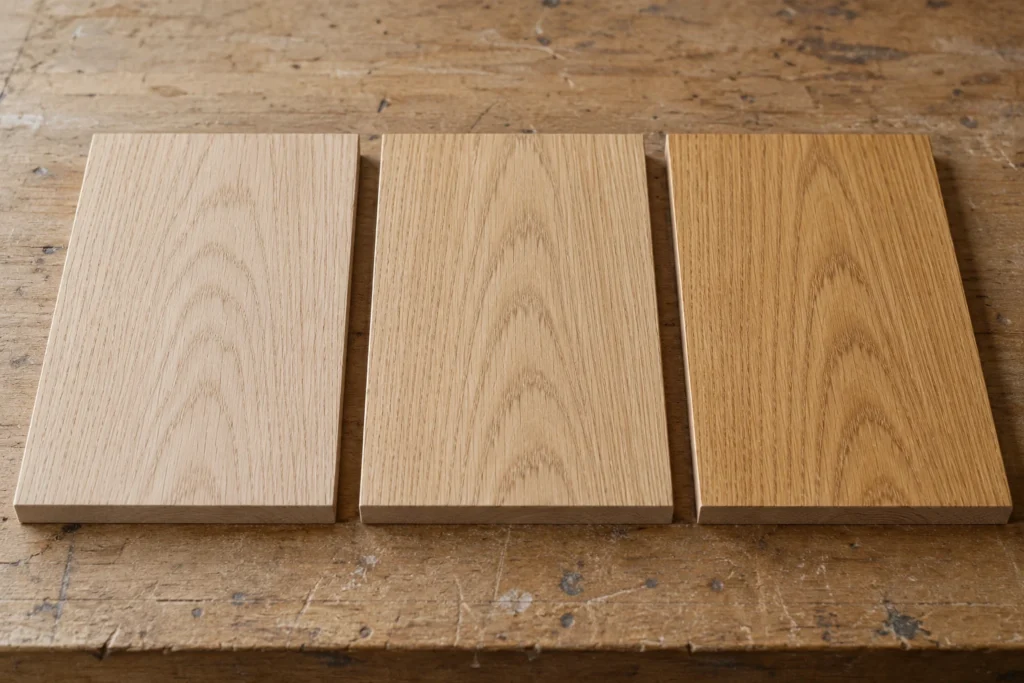
For pale maple, light oak or a whitewashed surface, a clear-looking water-based product may be the starting point; for a warmer oak or walnut appearance, an ambering finish may be desirable
Water-based does not mean colourless in every range; General Finishes Enduro-Var II is an example of a water-based coating designed to develop a warm amber appearance
Prepare two offcuts from the same timber, then use the intended stain and full coat schedule on each; keep the sanding preparation and sheen comparable so that the finish is the variable you are judging
View the samples upright and flat in the room where the piece will be used; a reflection from a glossy sample can look lighter than a satin sample even when the underlying colour is similar
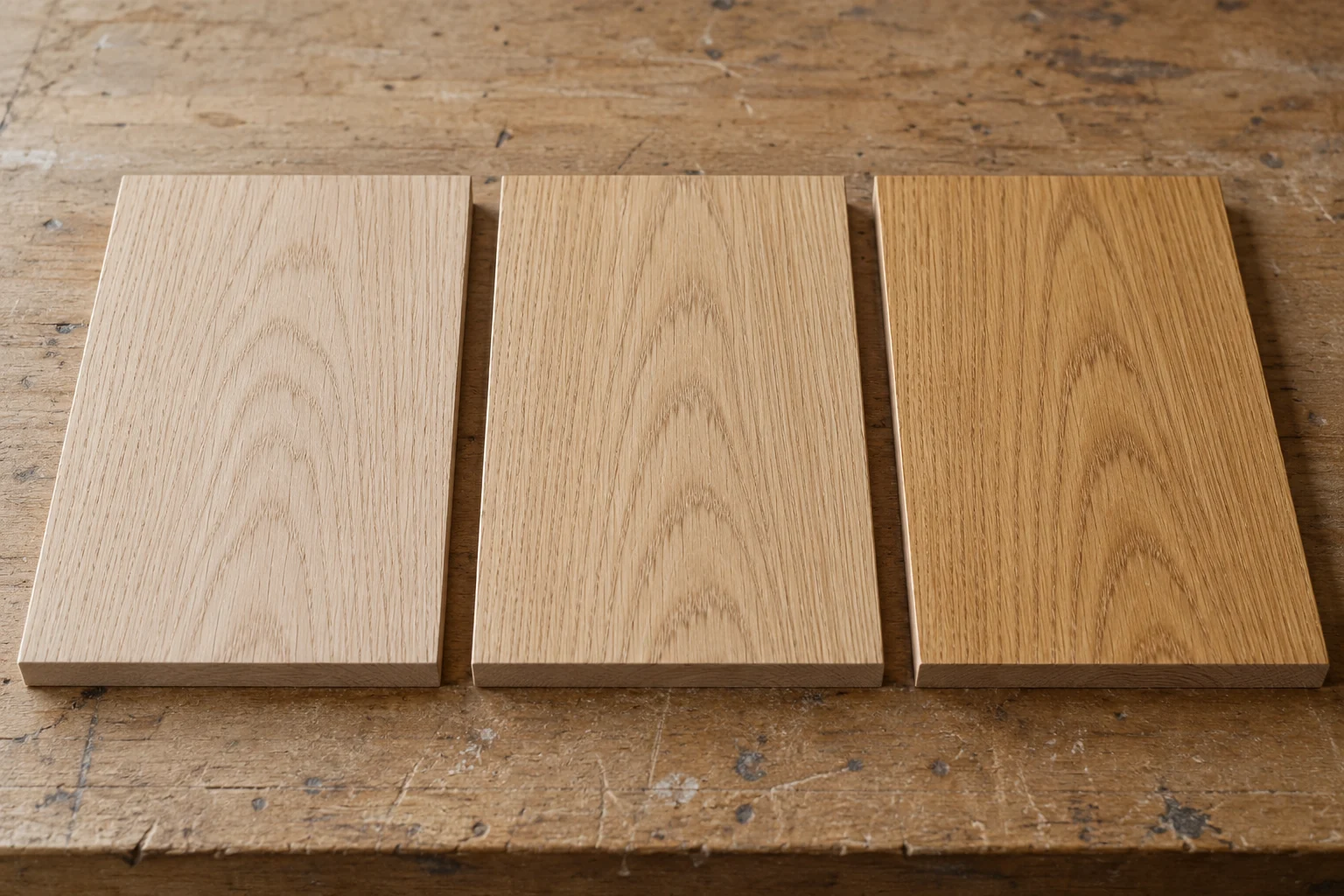
The photograph here illustrates possible colour differences rather than a controlled product test; the species, stain, number of coats and lighting all affect the result you will see on your own project
Separate recoat time, light use and full cure
A surface can feel dry before it is ready for another coat, and a recoated surface can still need days or weeks before it reaches its stated service condition
As product-specific examples, General Finishes lists a recoat time of at least 2 hours and a 21-day cure for High Performance, compared with at least 24 hours and a 30-day cure in Arm-R-Seal’s specifications; these figures depend on its stated conditions around 21°C / 70°F and 50% relative humidity
Those are examples from two named products, not universal rules; Minwax Fast-Drying Polyurethane has a different published recoat schedule, which is why the current container and technical instructions should drive the work plan
If a finish specifies a minimum 2-hour recoat interval, coats applied at 09:00 and 11:00 are only a possible schedule when the earlier coat is actually ready; a cool, damp workshop or a heavy application can make the clock alone misleading
Keep shelves, mats and tightly stacked objects off the surface until the coating’s instructions permit them; dry-to-touch is not a useful test for whether a book or rubber foot will leave an impression
Check the stain and the coating underneath
A water-based topcoat can work over some oil-based stains, but only when the products are compatible and the stain has dried sufficiently; the required interval can be much longer than the stain’s touch-dry time
General Finishes gives extended waiting instructions for its water-over-oil combinations; use the guidance for the exact pair of products, rather than transferring an interval from a different brand or a different stain
Do not coat over a sticky or oily-feeling surface to seal the problem in; first resolve excess stain or incomplete drying using the sticky stain guide
When refinishing, identify the existing coating where possible and follow the new finish’s cleaning, adhesion and sanding procedure; a clean-looking surface can still carry wax or polish that interferes with adhesion
Apply a consistent film and let it settle
Stir and apply the product as directed, using the recommended brush, pad or spray method; a coating intended for wiping may need a different film build from one intended for brushing
Work in manageable sections and preserve a wet edge where required; repeatedly brushing a water-based coat after it begins setting can leave marks that another pass will not remove
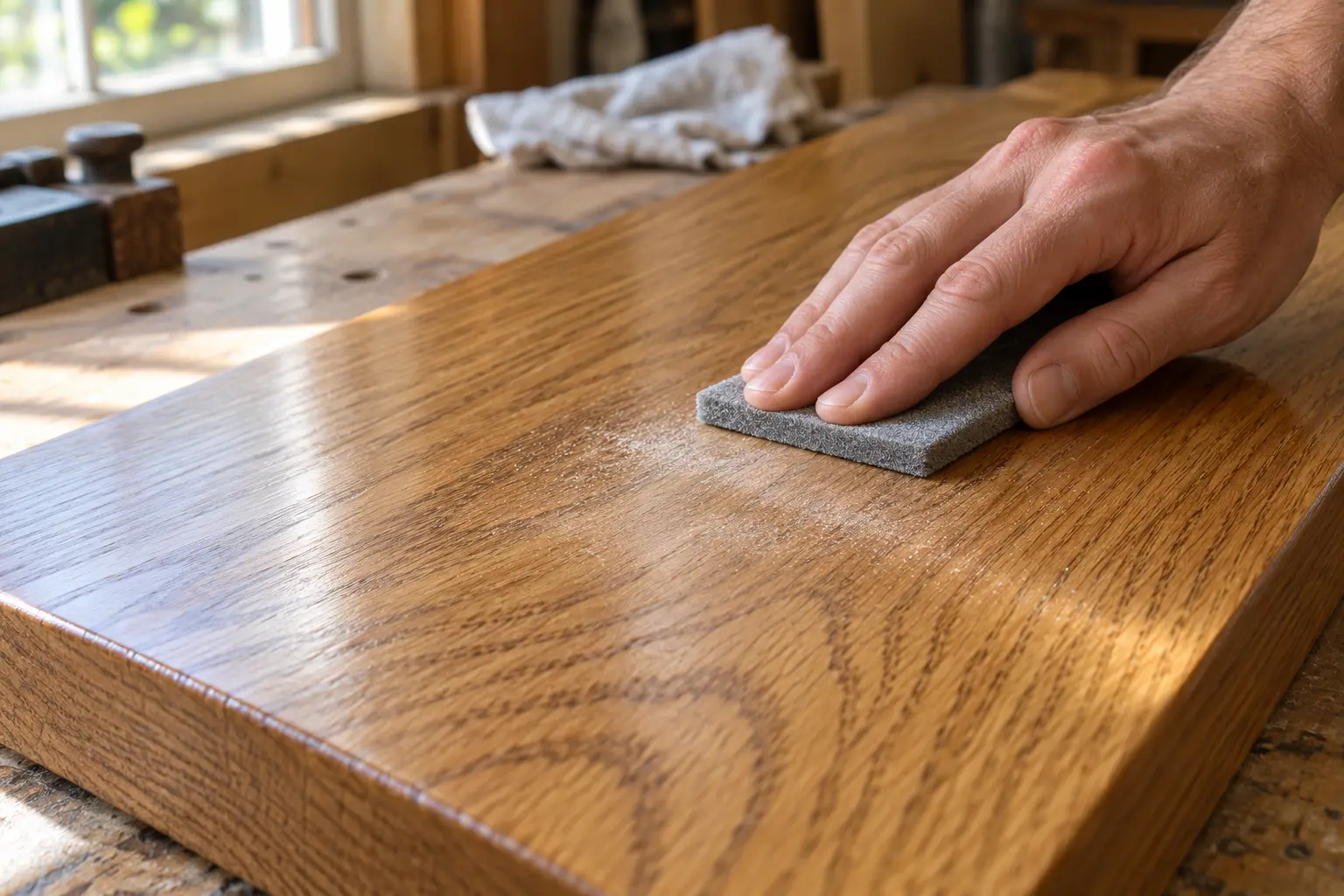
Follow the product’s sanding instructions between coats and remove the resulting dust; the guide to sanding polyurethane coats explains how to distinguish a light de-nib from an attempt to level a serious defect
Use the ventilation and protective measures on the label for either finish; low odour is not a substitute for those instructions, and solvent-bearing or drying-oil products need particular attention to ignition sources and the handling of used rags
Never leave oil-contaminated rags in a crumpled pile; follow the product’s fire-prevention and disposal instructions while the work and cleanup materials are drying
Match the choice to the job
For a pale indoor cabinet with limited time between coats, compare suitable clear water-based finishes first; for a warm-toned indoor piece where a longer finishing schedule is acceptable, compare oil-based and ambering water-based options on samples
For a tabletop or floor, narrow the shortlist to products explicitly intended for that service before comparing colour; no general claim that one solvent system is always tougher can replace the particular coating’s specification
For garden furniture, start with the outdoor wood finish guide and a weather-rated product; an interior polyurethane comparison cannot determine the right outdoor coating
Sources and product instructions
Working on outdoor timber instead?
An interior polyurethane is not automatically weather-rated; use an exterior finishing plan for outdoor work