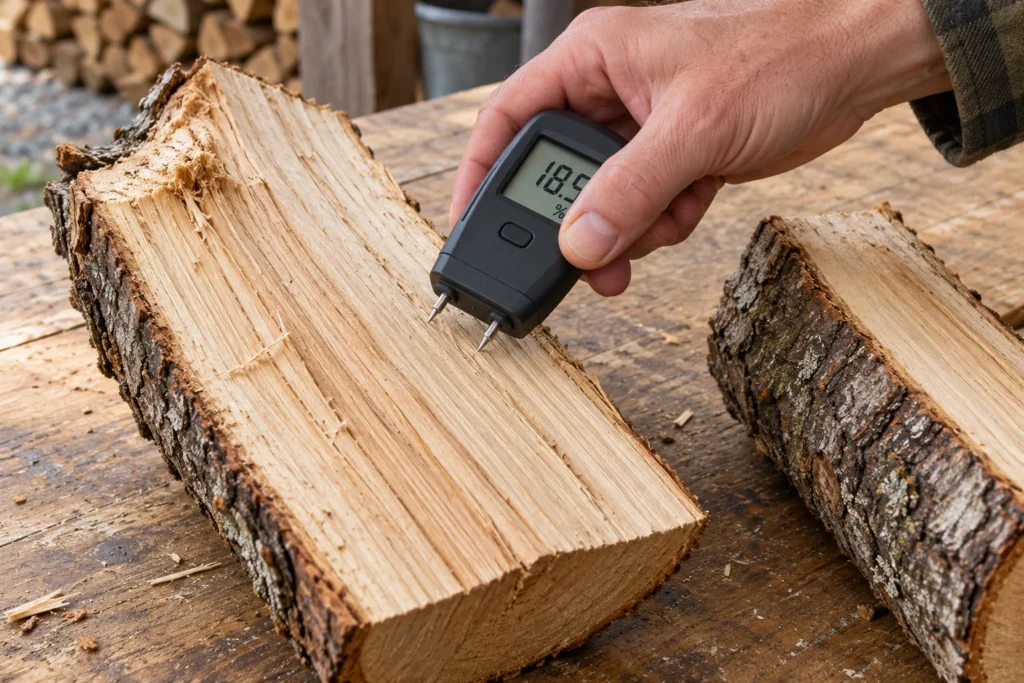
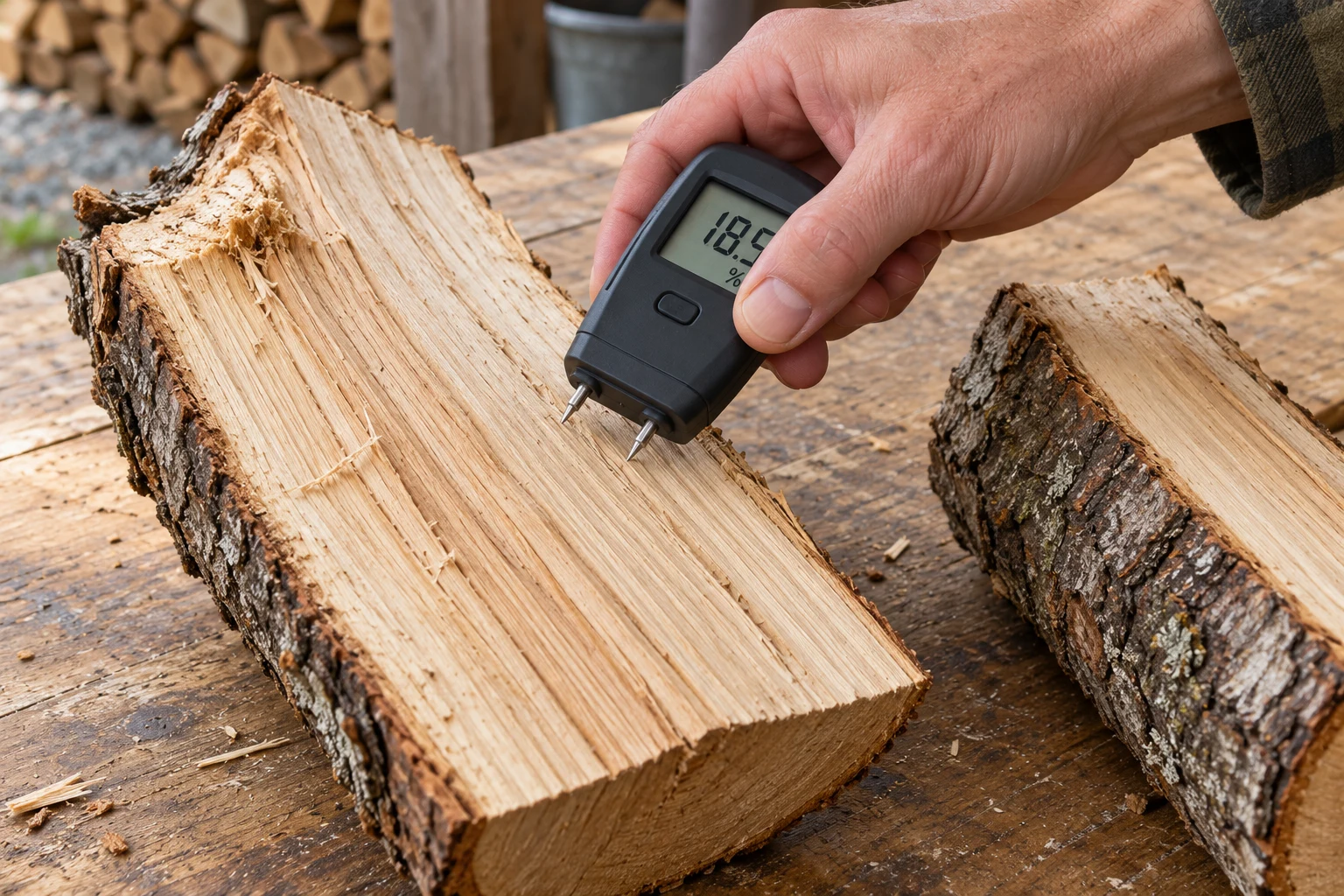
Measure the moisture inside the log
- Split a sample log
Expose a fresh inner face rather than testing the dry outside
- Take a meter reading
Follow the meter’s wood settings, pin direction, contact depth and temperature guidance
- Check several logs
Sample different parts of the stack before judging the whole supply
EPA guidance uses less than 20% moisture as the target for firewood ready to burn
Measure inside the log, not just the dry outside
A log may feel dry on the surface while retaining moisture inside · Bark, an old exposed split face and the end of a log can give a misleading picture of the interior · Use a fresh split to expose the material you need to test
- Check the meter
Select its wood mode, fit a sound battery and use any supplied calibration check as the manual describes
- Choose a representative log
Include the larger pieces you actually intend to burn, not only thin kindling from the front of the stack
- Split it safely
Support the log securely and keep hands clear of the splitting operation · Set the newly split piece down before taking a reading
- Test the fresh inner face
Make firm contact near the middle of the split surface, away from bark, ends and visible metal · Use the manufacturer’s pin orientation and insertion instructions
- Take more than one reading
Check a few positions on that face and record the readings before moving to another log
EPA’s moisture-meter leaflet recommends testing a newly split surface and checking multiple places · Follow your own instrument’s manual where its measurement method differs · A pinless meter may require a flat contact area, a particular thickness and a species setting that are awkward to achieve on an irregular log
Sample different parts of the wood stack
For a practical household check, start with at least three logs taken from different locations, including a less exposed part of the stack · This is a useful sampling routine, not a certification that every piece in a delivery is dry · Test more pieces if results differ widely, the load contains mixed sizes or you are about to rely on a whole batch
Record the stack or delivery, the date, the meter setting and the range of readings for each log · Mark separate batches so a ready stack does not become mixed with newly delivered wood
| Worked example | Fresh-face readings | Useful next action |
|---|---|---|
| Log A | 17%, 18%, 18% | Readings are below the target threshold |
| Log B | 22%, 24%, 23% | Keep this batch drying and sample nearby logs |
| Log C | 19%, 20%, 20% | Check the meter conditions and allow more drying if borderline |
The example is illustrative data, not a Firesided test · Averaging the whole table into one attractive number would hide the wetter log · Use the results to decide which wood to separate, dry longer or investigate
What moisture reading is ready to burn?
Use the appliance manufacturer’s fuel instructions alongside the moisture reading · EPA’s firewood guidance recommends less than 20% · A displayed value close to the threshold is not an exact laboratory measurement, particularly if the meter’s accuracy or correction settings are uncertain
A low reading does not establish that wood is otherwise suitable fuel · Do not use it to justify burning painted, coated, glued or preservative-treated material · Keep fuel selection separate from the question of moisture
Check doubtful readings before making a decision
| Possible problem | What to check |
|---|---|
| Cold or frozen logs | Use the operating-temperature range and correction method in the meter manual · Temperature can change resistance readings |
| Wrong measurement mode | A masonry or relative scale is not a wood moisture percentage |
| Only bark or end grain tested | Split another representative log and test its fresh inner face |
| Readings change with every attempt | Check battery, pin contact, surface condition and the meter’s calibration check |
| Numbers above the meter’s range | Treat them as a sign the wood needs further assessment or drying, not a precise high-moisture measurement |
Delmhorst explains that temperature affects resistance-type wood moisture measurements and provides correction guidance · The correction depends on the instrument and conditions · Do not apply a number found for a different meter without checking compatibility
The meter’s manual should also explain whether species correction is needed · A sound-looking stack, checking at the log ends or a hollow sound when pieces are knocked together can help you select samples, but those observations do not replace a fresh-face measurement
Dry the wetter wood and retest it
Keep the stack off the ground, protect it from rain and leave a path for moving air · Avoid enclosing wet logs tightly on every side · Separate incoming wood from the stack you have already checked, and label the delivery date
Retest representative logs before moving a batch into regular use · A calendar estimate alone cannot account for log size, wood species, weather and storage conditions · See how to store firewood outside for the storage arrangement
Once you know which wood is ready, use the firewood consumption calculator to plan stock · Use the firewood storage-size guide to compare stacked volume with usable storage space · Moisture percentage and cubic volume answer different questions
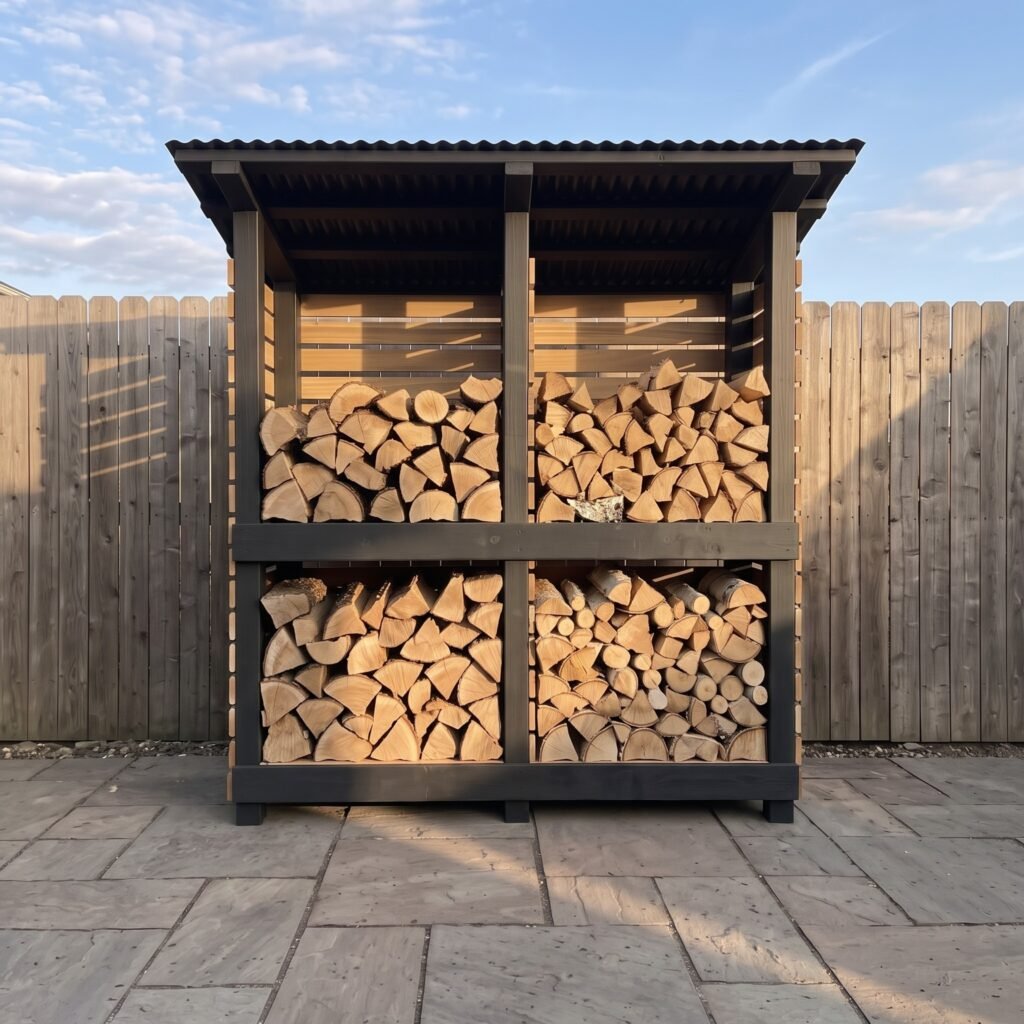
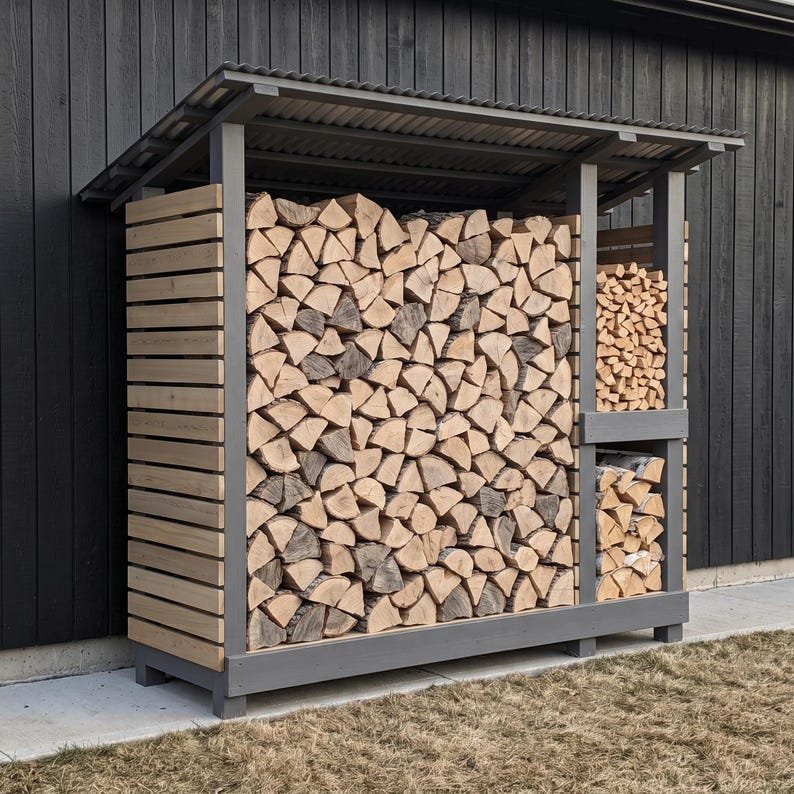
Firewood storage plans
Compare the tiered four-bay layout with the asymmetric log-and-kindling layout · Check usable bay dimensions against your stacked firewood volume
Sources and technical checks
- US EPA: test your wood with a moisture meter
- US EPA: moisture-meter leaflet
- US EPA: best wood-burning practices
- Delmhorst: temperature and moisture readings
- Delmhorst: checking moisture-meter accuracy
Check the current instructions for the particular panel, finish, fence design or moisture meter you use